

Judaism is one of the oldest and most influential religions in the world. It is the belief in one God or, Monotheism. Who revealed himself to the ancient Israelites through prophets, laws, and sacred writings. Judaism has a rich and diverse history, spanning thousands of years and encompassing many cultures, traditions, and practices.
Judaism is not just a religion. It is also a way of life that encompasses ethical values, social justice, and a sense of community. Jews follow the Torah, the first five books of the Hebrew Bible, as their primary source of guidance and instruction. They also observe various rituals and festivals, such as Shabbat (the weekly day of rest), Rosh Hashanah (the Jewish new year), Yom Kippur (the day of atonement), Passover (the commemoration of the exodus from Egypt), and Hanukkah (the celebration of the miracle of the oil).
Judaism is also a diverse and pluralistic faith, with different branches and movements that have developed over time. Some sects of Judaism are Orthodox, Conservative, Reform, and Reconstructionist. Each Sect has its own interpretation of Jewish law and practice. Its’ own institutions and organizations. There are also many cultural and ethnic groups within Judaism, such as Ashkenazi, Sephardi, Mizrahi, and Ethiopian, to name a few.
Judaism is a living and dynamic religion that continues to evolve and adapt to changing times and circumstances. It is a religion that values learning, questioning, and dialogue. It is a religion that seeks to balance tradition and innovation, faith and reason, individuality, and community. It is a religion that inspires millions worldwide to seek meaning, purpose, and connection in their lives.
Scripture
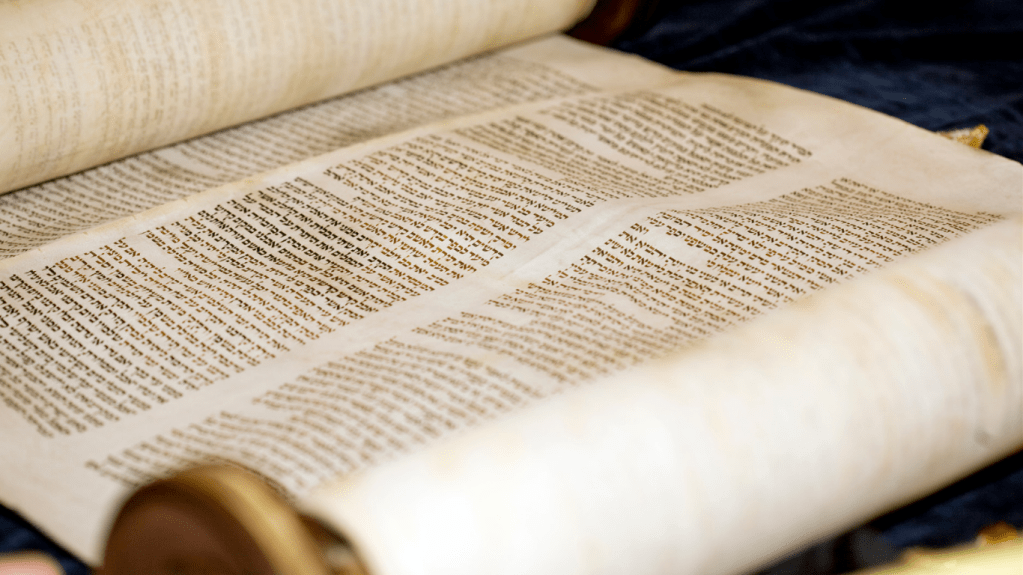
Judaism is one of the oldest and most influential monotheistic religions in the world. It is based on the belief in one God, who revealed himself to the ancient Israelites through the prophets and the Torah, the sacred scripture of Judaism. The Torah, also known as the Five Books of Moses, contains the laws, stories, and teachings that guide the Jewish people. The Torah is written in Hebrew, the original language of the Israelites, and is divided into 54 portions that are read in a yearly cycle in synagogues.
The Torah is not the only scripture in Judaism. There are also other books that are considered part of the Jewish canon, or collection of authoritative texts. These include:
- The Nevi’im, or Prophets, contain the historical and prophetic books of the Hebrew Bible, such as Joshua, Judges, Samuel, Kings, Isaiah, Jeremiah, Ezekiel, and the Twelve Minor Prophets.
- The Ketuvim, or Writings, contain the poetic and wisdom books of the Hebrew Bible, such as Psalms, Proverbs, Job, Song of Songs, Ruth, Lamentations, Ecclesiastes, Esther, Daniel, Ezra-Nehemiah, and Chronicles.
- The Talmud is a collection of rabbinic discussions and interpretations of the Torah and other Jewish laws and traditions. The Talmud consists of two parts: the Mishnah, which is the oral law codified around 200 CE, and the Gemara, which is a commentary on the Mishnah that was compiled in the years between 200 and 500 CE. There are two versions of the Talmud: the Babylonian Talmud and the Jerusalem Talmud.
- The Midrash is literature that explores and explains the meaning of the Torah and other scriptures through stories, parables, allegories, and discourses. The Midrash is in various collections. They date from different periods and regions of Jewish history.
- The Zohar is the main text of Kabbalah or Jewish mysticism. The Zohar is a commentary on the Torah. That reveals its hidden and esoteric meanings. The Zohar was written by Rabbi Shimon Bar Yochai and his disciples in the 2nd century CE. However, it was not widely known until Rabbi Moses de Leon published it in the 13th century CE.
These are some of the most important scriptures in Judaism, but there are also many other texts that have influenced Jewish thought and practice over time. These include:
- The Responsa are collections of rabbinic rulings and opinions on various legal and ethical questions that arise in different contexts and situations.
- The Siddur is the Jewish prayer book that contains the liturgy for daily and special occasions.
- The Haggadah is the text that narrates the story of the Exodus from Egypt and guides the Passover Seder ritual.
- The Pirkei Avot is a tractate of the Mishnah that contains ethical teachings and maxims from various rabbis.
- The Shulchan Aruch is a code of Jewish law that was compiled by Rabbi Joseph Caro in the 16th century CE and summarizes the opinions of various medieval authorities.
Judaism scripture is rich and diverse, reflecting the history and culture of the Jewish people. It is also dynamic and evolving, as new interpretations and applications are constantly being developed by scholars and communities. Judaism scripture is not only a source of information and instruction but also a source of inspiration and connection to God and to one another.
 The Seeker's Lamp