The Battle of Ragnarök

Ragnarök, the prophesied twilight of the gods. This cataclysmic event foretold in the ancient Icelandic texts known as the Eddas, depicts the ultimate battle between the gods and their enemies, leading to the destruction of the Nine Realms and the eventual rebirth of a new world.

Ragnarök, also known as the “Fate of the Gods” or the “Doom of the Divine,” is a pivotal moment in the Norse cosmological cycle, representing the culmination of a long-standing conflict between the Æsir (the principal gods) and their adversaries, the giants and monstrous beings. This mythical event has captured the imagination of scholars, artists, and storytellers for centuries, offering a unique perspective on the cyclical nature of existence and the eternal struggle between order and chaos.

The Significance of Ragnarök in Norse Mythology

Ragnarök holds immense significance within the Norse mythological tradition, serving as a powerful metaphor for the cyclical nature of life, death, and rebirth. It represents the inevitable end of the current world order, a violent and chaotic period that paves the way for a new beginning. This concept of cosmic renewal resonates deeply with the Norse worldview, which embraced the idea of constant change and the impermanence of all things.

Beyond its symbolic relevance, Ragnarök also serves as a testament to the Norse belief in fate and the inescapable nature of destiny. The events leading up to and during Ragnarök are predetermined, with even the gods powerless to alter the course of events. This fatalistic outlook underscores the importance of living honorably and facing one’s fate with courage and dignity.

The Prophesied Doom: Signs and Events Leading to Ragnarök

According to the Eddas, various signs and events herald the approach of Ragnarök, each more ominous than the last. These omens include:

  1. The Fimbulwinter: A great winter that lasts for three years, with no summer in between, plunging the world into perpetual darkness and freezing conditions.
  2. The Destruction of the Cosmic Tree: The mighty ash tree Yggdrasil, which connects the Nine Realms, trembles, and shakes, signaling the impending doom.
  3. The Arrival of the Wolf and the Serpent: The monstrous wolf Fenrir breaks free from his chains, and the mighty Midgard Serpent, Jörmungandr, emerges from the ocean’s depths, both intent on wreaking havoc.
  4. The Unleashing of the Fire Giants: The fire giants, led by Surtr, cross the bridge of Bifröst and march towards the battlefield, setting the world ablaze with their fiery swords.

The Gods and Heroes of Norse Mythology: Their Roles in Ragnarök

As the events of Ragnarök unfold, the gods and heroes of Norse mythology find themselves embroiled in a desperate struggle for survival. Each figure plays a crucial role in the unfolding drama:

  1. Odin: The all-father of the gods, Odin, leads the Æsir into battle, wielding his mighty spear, Gungnir. Despite his wisdom and power, he is fated to be slain by the monstrous wolf Fenrir.
  2. Thor: The thunder god, renowned for his strength and courage, engages in a fierce battle with the Midgard Serpent, ultimately slaying the beast but succumbing to its venomous breath.
  3. Freyr: The god of fertility and prosperity, Freyr bravely fights against the fire giant Surtr but ultimately falls in the conflict.
  4. Heimdallr: The watchman of the gods, Heimdallr sounds the Gjallarhorn, alerting the Nine Realms to the impending battle, before engaging in combat with Loki.
  5. Loki: The trickster god, Loki, leads the forces of chaos and destruction, ultimately meeting his demise at the hands of Heimdallr.
  6. The Einherjar: The brave warriors who have fallen in battle and reside in Valhalla, the hall of the slain, join the gods in their final stand against the forces of chaos.

The Battle of Ragnarök: The Final Conflict between Gods and Giants

As the signs of Ragnarök manifest, the gods and their allies gather on the plains of Vigrid for the ultimate battle against the giants, monsters, and forces of chaos. This epic clash, known as the Ragnarök itself, is a titanic struggle that shakes the very foundations of the Nine Realms.

The battle rages fiercely, with gods and giants alike falling in combat. Odin is slain by the wolf Fenrir, while Thor defeats the Midgard Serpent but succumbs to its venom. Freyr falls to the fire giant Surtr, and Heimdallr and Loki slay each other in a deadly duel.

As the battle climaxes, Surtr unleashes a torrent of flames that engulfs the entire world, reducing the Nine Realms to ash and cinders.

The Cataclysmic Events of Ragnarök: The Destruction of the Nine Realms

The aftermath of the Battle of Ragnarök is nothing short of cataclysmic, as the Nine Realms are consumed by the destructive forces unleashed during the conflict. The events that follow are truly apocalyptic:

  1. The Sinking of the Earth: The Earth itself sinks into the vast, churning ocean, leaving no trace of the once-vibrant realms.
  2. The Destruction of Asgard: Asgard, the realm of the gods, is consumed by the flames of Surtr’s sword, leaving the once-mighty citadel in ruins.
  3. The Blackening of the Sun and Moon: The sun and moon are swallowed by the gaping maws of the wolves Sköll and Hati, plunging the cosmos into darkness.
  4. The Shattering of the Heavens: The stars themselves are torn from the heavens, raining down upon the earth as the celestial realm crumbles.
  5. The Unleashing of Cosmic Fires: Surtr’s flames spread across the Nine Realms, reducing everything in their path to ash and cinders, leaving nothing but a scorched and barren landscape.

The Aftermath of Ragnarök: The Rebirth and Renewal of the World

While the events of Ragnarök are undoubtedly catastrophic, they also represent the beginning of a new cycle of creation. From the ashes of the old world, a new, verdant realm emerges, untouched by the destruction of the past.

According to the Eddas, a few survivors emerge from the chaos, including the gods Baldr, Höðr, and the children of the gods. These survivors become the progenitors of a new race of beings, destined to repopulate the reborn world.

The earth rises anew from the depths of the ocean, lush and fertile, ready to support life once more. The sun and moon are reborn, and a new generation of gods takes their place in the heavens, ushering in a new era of peace and prosperity.

Interpretations and Symbolism of Ragnarök in Norse Mythology

Ragnarök is a complex and multifaceted myth, open to various interpretations and symbolic readings. Some scholars view it as a metaphor for the cyclical nature of existence, with the destruction of the old world paving the way for the birth of the new. Others see it as a reflection of the Norse belief in the inevitability of fate and the acceptance of one’s destiny.

Additionally, Ragnarök can be interpreted as a cautionary tale about the consequences of unchecked greed, violence, and disharmony. The events leading up to the cataclysm are often attributed to the breakdown of social and cosmic order, with the gods and giants engaging in a destructive cycle of conflict and retribution.

Similarities and Differences between Ragnarök and Other Apocalyptic Myths

While Ragnarök is a unique and distinct myth within the Norse tradition, it shares certain similarities with other apocalyptic myths from various cultures around the world. For example, the concept of a world-ending event followed by a rebirth or renewal is present in many belief systems, such as the Hindu concept of the Kali Yuga and the Christian idea of the Apocalypse.

However, Ragnarök also differs significantly from other apocalyptic myths in several ways. Unlike many other traditions, which often depict the end of the world as a punishment for human transgressions, Ragnarök is portrayed as an inevitable cosmic event, predetermined by fate and the natural cycle of existence.

Additionally, the Norse myth places a greater emphasis on the role of gods and supernatural beings in the unfolding of apocalyptic events, rather than solely focusing on the actions of humans.

The Influence of Ragnarök in Popular Culture

The myth of Ragnarök has had a profound impact on popular culture, inspiring countless works of literature, film, music, and art. From the epic poems of the Eddas to modern-day fantasy novels and video games, the themes and imagery of Ragnarök have captured the imagination of creators and audiences alike.

One of the most notable examples of Ragnarök’s influence is J.R.R. Tolkien’s “The Lord of the Rings” trilogy, which draws heavily from Norse mythology, including elements of the apocalyptic myth. The final battle between the forces of good and evil, as well as the cyclical nature of the story, echoes the themes of Ragnarök.

In recent years, the Marvel Cinematic Universe has also explored the concept of Ragnarök, with the 2017 film “Thor: Ragnarok” depicting the destruction of Asgard and the subsequent rebirth of the realm.

Beyond literature and film, Ragnarök has also inspired numerous musical works, from Wagner’s famous operatic cycle “Der Ring des Nibelungen” to heavy metal bands that incorporate Norse mythology into their lyrics and imagery.

Dive deeper into the captivating world of Norse mythology by exploring our comprehensive collection of books, audiobooks, and online resources. Unravel the secrets of Ragnarök and other legendary tales, and embark on a journey through the rich tapestry of ancient Scandinavian lore. Visit our website or your nearest bookstore today to discover the timeless wisdom and enchantment of these enduring myths.

Conclusion: The End and Beginning in the Norse Myth of Ragnarök

The Norse myth of Ragnarök is a powerful and enduring tale that encapsulates the cyclical nature of existence, the inevitability of fate, and the eternal struggle between order and chaos. From the ominous signs heralding its approach to the cataclysmic events that reshape the cosmos, Ragnarök is a testament to the grandeur and complexity of Norse mythology.

Yet, amidst the destruction and chaos, Ragnarök also offers a glimmer of hope – the promise of rebirth and renewal. The survivors who emerge from the ashes of the old world represent the resilience of life and the indomitable spirit of creation.

The Poetic Edda

The Poetic Edda, also known as the Elder Edda, is a remarkable collection of Old Norse poems that serves as a window into the rich tapestry of Norse mythology and epic storytelling. This ancient literary treasure trove, composed between the 9th and 13th centuries, offers a captivating exploration of the cosmological beliefs, heroic legends, and profound wisdom of the Viking Age.

Within its pages, the Poetic Edda unveils a world where gods, giants, and mortals intertwine in a grand narrative that spans creation, destruction, and the eternal cycle of life. Its verses resonate with the thunderous clashes of mythical battles, the whispers of profound riddles, and the echoes of timeless truths that have transcended the ages.

As we delve into this epic work, we embark on a journey that not only illuminates the rich heritage of Norse culture but also invites us to ponder the enduring questions of existence, courage, and the indomitable spirit of humanity.

Understanding Norse Mythology

Before venturing into the depths of the Poetic Edda, it is essential to grasp the fundamental concepts of Norse mythology. This ancient belief system, rooted in the lands of Scandinavia, revolved around a pantheon of deities, each embodying various aspects of nature, wisdom, and human virtues.

At the heart of this mythology lies the cosmic tree, Yggdrasil, a towering ash that connects the Nine Realms, from the celestial realm of Asgard, home of the Æsir gods, to the fiery depths of Muspelheim and the icy expanse of Niflheim. This intricate cosmology serves as the backdrop for the epic tales woven within the Poetic Edda.

The Origins of the Poetic Edda

The Poetic Edda’s origins are shrouded in mystery, with its authorship and exact date of composition remaining a subject of scholarly debate. What is known, however, is that these poems were likely composed by anonymous skalds (poets) during the Viking Age and later preserved through oral tradition and written manuscripts.

One of the most renowned manuscripts, the Codex Regius, dates back to the 13th century and contains a collection of mythological poems, heroic lays, and wisdom verses. This precious document, along with other fragments and sources, has allowed scholars to piece together the intricate tapestry of Norse mythology and epic poetry.

The Structure and Themes of the Poetic Edda

The Poetic Edda is divided into several sections, each exploring different facets of Norse mythology and literature. The first section, known as the Mythological Poems, delves into the creation of the cosmos, the exploits of the gods, and the epic struggle between order and chaos.

The Heroic Lays, on the other hand, recount the valiant deeds of legendary figures such as Sigurd the Völsung, Brynhild, and Gudrun, weaving tales of love, betrayal, and the indomitable human spirit in the face of adversity.

Interspersed throughout the collection are the Wisdom Poems, offering profound insights into the nature of existence, the virtues of honor and courage, and the intricate web of relationships that bind the Nine Realms together.

Exploring the Gods and Goddesses of Norse Mythology

The Poetic Edda introduces us to a pantheon of captivating deities, each with their unique personalities, domains, and roles in the cosmic drama. From the mighty Odin, the All-Father and god of wisdom and war, to the thunderous Thor, protector of Midgard (the realm of mortals), and the cunning Loki, the trickster god whose machinations often set events in motion.

We encounter the radiant Freyja, the goddess of love, fertility, and magic, and the enigmatic Frigg, the Queen of the Æsir and the embodiment of marital fidelity. These divine beings are not mere mythological figures but embodiments of the natural forces, human virtues, and existential questions that have captivated humanity since time immemorial.

Legendary Heroes and Heroines in the Poetic Edda

Alongside the gods and goddesses, the Poetic Edda introduces us to a pantheon of mortal heroes and heroines whose exploits have become the stuff of legend. From the tragic tale of Sigurd the Völsung, whose slaying of the dragon Fafnir and subsequent betrayal by his wife Brynhild weave a tapestry of love, honor, and revenge, to the indomitable spirit of Gudrun, whose resilience in the face of unimaginable loss and suffering serves as an inspiration to all.

These legendary figures are not mere characters but embodiments of the human condition, grappling with the universal themes of love, loss, courage, and the relentless pursuit of honor and glory in the face of overwhelming odds.

Famous Myths from the Poetic Edda

Within the pages of the Poetic Edda, we encounter some of the most captivating and enduring myths of Norse mythology. The creation myth, which recounts the birth of the cosmos from the primordial void of Ginnungagap, sets the stage for the cosmic drama that unfolds.

The tale of Ragnarök, the prophesied twilight of the gods, weaves a tapestry of epic battles, cosmic upheaval, and the ultimate renewal of the world, offering a profound meditation on the cyclical nature of existence.

The exploits of Thor, as he battles the Midgard Serpent and the giants who threaten the realms, showcase the enduring struggle between order and chaos, while the mischievous antics of Loki serve as a reminder of the ever-present forces of disruption and change.

Symbolism and Imagery in Norse Mythology

The Poetic Edda is a rich tapestry of symbolism and imagery, with each verse and stanza infused with layers of meaning and metaphor. The cosmic tree Yggdrasil, for instance, represents not only the interconnectedness of the Nine Realms but also the eternal cycle of life, death, and rebirth.

The hammer Mjölnir, Thor’s iconic weapon, symbolizes the power of thunder and the primordial forces of nature, while the runes, ancient symbols of wisdom and divination, offer glimpses into the mysteries of the cosmos and the human psyche.

These symbols and images are not mere decorative elements but rather profound expressions of the Norse worldview, inviting us to ponder the deeper truths that lie beneath the surface of these ancient tales.

Translations and Interpretations of the Poetic Edda

Over the centuries, the Poetic Edda has been the subject of numerous translations and interpretations, each offering a unique lens through which to view this literary masterpiece. From the pioneering work of Snorri Sturluson, the 13th-century Icelandic scholar and author of the Prose Edda, to contemporary translations by scholars and poets alike, the Poetic Edda continues to captivate and inspire generations of readers.

These translations not only preserve the linguistic and cultural heritage of the Norse people but also offer new perspectives and insights into the universal themes and truths that resonate within these ancient verses.

The Influence of the Poetic Edda on Modern Culture

The enduring legacy of the Poetic Edda extends far beyond the realms of Norse mythology and literature. Its influence can be seen in the works of writers, artists, and creators across various mediums, from the epic fantasy novels of J.R.R. Tolkien to the thunderous soundscapes of heavy metal music.

The heroic tales and mythological motifs found within the Poetic Edda have inspired countless works of art, from paintings and sculptures to films and video games, each offering a unique interpretation of these timeless stories.

Moreover, the Poetic Edda’s exploration of universal themes such as courage, honor, and the human condition continues to resonate with audiences across cultures and generations, serving as a testament to the enduring power of storytelling and the shared experiences that bind us all.

Conclusion: The Enduring Legacy of the Poetic Edda

As we reach the conclusion of our journey through the Poetic Edda, we are left with a profound appreciation for the richness and depth of Norse mythology and epic poetry. This ancient literary treasure trove has withstood the test of time, offering a window into the beliefs, values, and existential musings of a culture that has left an indelible mark on the tapestry of human civilization.

The Poetic Edda’s enduring legacy lies not only in its captivating tales and vivid imagery but also in its ability to inspire and challenge us to ponder the universal truths that transcend the boundaries of time and culture. Its verses resonate with the timeless questions of existence, the indomitable human spirit, and the eternal cycle of creation and destruction that governs the cosmos.

As we bid farewell to the realms of Norse mythology, we carry with us the wisdom, courage, and profound insights gleaned from these ancient tales.

The Oak a Sacred Tree

The oak tree is one of the most revered and ancient trees in the world, with a rich history and symbolism across many cultures and religions. The oak tree has strength, power, wisdom, knowledge, protection, and longevity. In this blog post, we will explore some examples and meanings of the oak tree symbolism in different belief systems and some quotes that support it.

The Oak Tree in Celtic Mythology

The oak tree is more than just a majestic plant that provides shade and timber. It is also a symbol of strength, endurance, wisdom, and courage in Celtic mythology. The oak tree was revered by the Druids, the ancient priests of the Celts, who derived their name from the word “duir”, meaning oak or door. The oak tree was seen as the door to the otherworld, the realm of spirits and ancestors, and the source of inspiration and magic.

The oak tree was associated with the supreme gods of thunder and lightning in various European cultures, such as Zeus in Greece, Jupiter in Rome, Thor in Scandinavia, and Taranis in Gaul. The oak tree was believed to be more prone to lightning strikes than other trees, and the mistletoe that grew on it was considered a sacred and powerful plant by the Druids. They harvested it with a golden sickle during a special ceremony after the winter solstice.

The oak tree was also a symbol of kingship and authority, as many ancient rulers wore crowns of oak leaves or carried oak staffs. The oak tree was thought to influence the movements of the planet Mars, which governed war and fertility. The oak tree was also a source of nourishment and healing for many animals and humans, who used its acorns, bark, leaves and wood for various purposes.

The oak tree still holds a special place in Irish culture and folklore, as it is seen as a sign of longevity, resilience, and heritage. Many place names in Ireland contain the word “dair” or “darach”, meaning oak, such as Glendalough (the valley of two lakes) or Derry (the oak grove). The oak tree is also featured in many legends and stories, such as the tale of Fionn Mac Cumhaill (Finn MacCool), who gained wisdom by eating the salmon that fed on the nuts of the nine hazels that grew around the well of wisdom under an oak tree.

The oak tree is a remarkable natural gift that deserves our respect and admiration. It is a beautiful and useful plant and a reminder of our connection to our ancestors, our spirituality and our environment.

Some quotes that reflect the Celtic symbolism of the oak tree are:

– “The oak is not felled at one stroke.” – Spanish proverb

– “The voice of the oak is like unto the voice of God.” – Irish saying

– “Be like the old oak: when all things around you fall, stand firm.” – Scottish proverb

The Oak Tree in Greek and Roman Mythology

One of the most prominent cultures that revered the oak tree was the ancient Greeks, who believed it was sacred to Zeus, their king of the gods. Zeus was the ruler of the sky, thunder, and lightning, and he often used the oak tree as his medium of communication. The oldest oracle in Greece, Dodona, was located in a grove of oaks, where priests and pilgrims would listen to the voice of Zeus through the sound of thunder or the rustling of the leaves. The oak tree also represented Zeus’s authority and justice, as the supreme judge of gods and men.

The Romans also adopted the oak tree as a symbol of their chief god, Jupiter, who was equivalent to Zeus in many aspects. The oak tree was often used to crown victorious generals and emperors, as a sign of honor and glory. The oak tree also symbolized strength and endurance, as it could withstand storms and harsh conditions.

Another interesting connection between the oak tree and mythology is the story of Orpheus, the legendary musician who could charm nature with his lyre. Orpheus was said to be the son of a muse and a king of Thrace, and he fell in love with a nymph named Eurydice. When she died from a snake bite, Orpheus descended to the underworld to bring her back, using his music to soften the hearts of Hades and Persephone. However, he failed to follow their condition of not looking back at her until they reached the upper world, and he lost her forever. In his grief, he wandered around the world, playing his lyre and avoiding the company of women. He was eventually killed by a group of maenads, who tore him apart and threw his head and lyre into a river. His head continued to sing as it floated downstream until it reached the island of Lesbos, where it was buried under an oak tree. His lyre was placed in the sky as a constellation by Zeus.

As you can see, the oak tree has many fascinating stories and meanings attached to it. It is a beautiful and useful plant, also a symbol of wisdom, power, and inspiration.

Some quotes that reflect the Greek and Roman symbolism of the oak tree are:

– “The tallest oaks have been known to grow from little acorns.” – Cicero

– “He plants his footsteps in the sea / And rides upon the storm / He treasures up his bright designs / And works his sovereign will / Ye fearful saints fresh courage take / The clouds ye so much dread / Are big with mercy and shall break / In blessings on your head / Judge not the Lord by feeble sense / But trust him for his grace / Behind a frowning providence / He hides a smiling face / His purposes will ripen fast / Unfolding every hour / The bud may have a bitter taste / But sweet will be the flower / Blind unbelief is sure to err / And scan his work in vain / God is his own interpreter / And he will make it plain.” – William Cowper

– “The groves were God’s first temples.” – William Cullen Bryant

The Oak Tree in Norse and Germanic Mythology

The oak tree is one of the most revered and ancient trees in the world. It has been a symbol of strength, endurance, wisdom, and nobility for many cultures and civilizations. In this blog post, we will explore the oak tree’s significance in Norse and Germanic mythology, and how it was associated with some of the most powerful gods and goddesses.

The oak tree was sacred to Thor, the god of thunder, lightning, storms, and fertility in Norse mythology. Thor was the son of Odin, the chief god, and Jörd, the earth goddess. He wielded a mighty hammer called Mjölnir, which he used to strike his enemies and create thunderbolts. He also rode a chariot pulled by two goats, Tanngrisnir and Tanngnjóstr.

Thor was often depicted as a red-bearded warrior with a belt of strength and iron gloves. He was the protector of Asgard, the realm of the gods, and Midgard, the realm of humans. He was also the patron of farmers, sailors, craftsmen and warriors. He was worshipped by many people across Scandinavia and Germany, especially by those who lived in rural areas or near forests.

The oak tree was believed to be Thor’s favorite tree, as it was the most resilient and majestic of all trees. It could withstand lightning strikes, strong winds, droughts and pests. It also provided shelter, food and fuel for humans and animals. The oak tree was seen as a manifestation of Thor’s power and presence on earth. People would carve runes or symbols on oak trees to invoke Thor’s protection or blessing. They would also hang offerings of food, drink, or metal on oak branches to honor him.

The oak tree was also linked to Thunar, the god of thunder in Germanic mythology. Thunar was similar to Thor in many aspects, but he had a different origin story. He was the son of Woden (Odin) and Frea (Frigg), the goddess of love and fertility. He also had a hammer called Donarshammer, which he used to fight against the giants and other enemies of the gods.

Thunar was also associated with the Gothic term Fairguni, which means “oak god”. This suggests he was originally a nature deity who presided over oak groves and forests. Thunar was revered by many Germanic tribes. Such as the Franks, Saxons, Angles, and Lombards. He was also connected to Tiwaz (Tyr), the god of war and justice, and Ziu (Ziu), the god of the sky.

The oak tree was not only a symbol of Thor and Thunar, but also of other gods and goddesses in Norse and Germanic mythology. For example:

– Odin, the god of wisdom, poetry, magic, and death, hung himself from an oak tree for nine days and nights to gain knowledge of the runes.

– Freyja, the goddess of love, beauty, fertility, and war, had a chariot drawn by two cats that were born from an oak tree.

– Frigg, the goddess of marriage, motherhood and domesticity, wove clouds from oak wool.

– Idunna, the goddess of youth and immortality, kept golden apples in an oak chest that she gave to the gods to renew their vitality.

– Ullr, the god of hunting, skiing and archery, had a bow made from an oak branch.

– Skadi, the goddess of winter, snow, and mountains, had skis made from oak wood.

The oak tree was also a symbol of royalty and nobility in Norse and Germanic culture. Many kings and queens wore crowns or wreaths made from oak leaves or acorns to show their authority and connection to the gods. They also held ceremonies or rituals in oak groves or under oak trees to celebrate important events or seek divine guidance.

The oak tree was also a source of inspiration and creativity for poets, artists and craftsmen. They used oak wood to carve statues, furniture, or musical instruments. They also used oak bark to make ink or dye for writing or painting. They also used oak galls to make black pigment for tattoos or cosmetics.

The oak tree was a remarkable tree that played a vital role in Norse and Germanic mythology and culture. It was a symbol of strength, endurance, wisdom, and nobility that inspired awe and reverence among humans and gods alike. It was also a symbol of life, fertility and abundance that provided sustenance and comfort for many living beings. It was indeed worthy of being called “the king of trees”.

Some quotes that reflect the Norse and Germanic symbolism of the oak tree are:

– “From a withered tree a flower blooms.” – Buddha

– “He who plants an oak looks forward to future ages.” – Horace

– “Mighty oaks from little acorns grow.” – English proverb

The Oak Tree in Slavic and Baltic Mythology

The oak tree in Slavic and Baltic mythology, where it was associated with the highest god of thunder and the world tree.

In Slavic mythology, the highest god of the pantheon was Perun, the god of sky, thunder, lightning, storms, rain, law, war, fertility and oak trees. He was worshipped as a mediator between heaven and earth, and his attributes were fire, mountains, wind, eagle, hammer, axe, and arrow. He was often depicted as a bearded man with a golden mustache, holding a hammer or an axe. His sacred animal was the eagle, which perched on the top of the world tree.

The world tree in Slavic mythology was usually an oak, which represented the order and harmony of the cosmos. The oak tree had three parts: the roots, which connected to the underworld where the dead ancestors dwelled; the trunk, which represented the present life of humans and animals; and the branches and leaves, which symbolized the offspring and future generations. The oak tree was also a source of wisdom and immortality, as it was believed to contain the fire of life within its core.

The oak tree was also sacred to Perun’s Baltic counterpart, Perkūnas, the god of thunder, lightning, storms, rain, law, war, fertility, and oak trees. In his attributes and symbols, he was similar to Perun, but he had a horned helmet and rode a chariot pulled by goats. He also had a rivalry with Velnias, the god of the underworld and death, who often tried to steal his fire or his wife. Perkūnas would chase him with his thunderbolts and strike him down.

The oak tree was also the world tree in Baltic mythology, which connected the three realms of heaven, earth, and underworld. It was also a symbol of Perkūnas’ power and authority over nature and human affairs. The oak tree was believed to be inhabited by spirits and deities, who could grant blessings or curses to people. The oak tree was also a place of worship and sacrifice for Perkūnas and other gods.

The oak tree in Slavic and Baltic mythology was not only a plant, but a living being with a soul and a spirit. It was a manifestation of the divine force that ruled over the world and its elements. It was a source of life, wisdom, and protection for humans and animals. It was a sacred tree that deserved respect and reverence.

Some quotes that reflect the Slavic and Baltic symbolism of the oak tree are:

– “An old man planted an acorn in the ground / And said as he planted it: ‘I plant this acorn along with hope.’ / And hope did not perish through long time passed away / And storms swept over it day after day.” – Ivan Franko

– “A good man is like a good tree. His roots are deep, his branches are high, and his fruits are sweet.” – Lithuanian proverb

Keep Seeking!

Leave a Reply

The Cedar 

The majestic cedar tree is regarded highly by many cultures and religions. Owing to its profound symbolic and spiritual significance. In this captivating narrative, we shall delve into the multifaceted aspects of cedar symbolism and its intertwined connection with different religions and traditions.

One of the primary interpretations of the cedar is its association with protection. Renowned for its robust and enduring timber, the cedar tree has an unparalleled ability. To withstand adverse weather conditions and repel pests. Furthermore, the aromatic oil and resin derived from the cedar exhibit antiseptic and insect-repelling properties. The cedar is effective in preventing infections and diseases. Countless civilizations have used cedar wood and oil. Examples are constructions of sacred spaces, including temples, shrines, and altars. Additionally, invaluable resources were used in the creation of tools, weaponry, and furniture. The cedar is also regarded as a safeguard against malevolent spirits and negative energies, as its alluring fragrance purifies the air and engenders an atmosphere of sanctity.

Cedar carries a profound symbolism that extends beyond its physical presence. One such meaning is wisdom, derived from the fact that cedar trees have stood as witnesses to the ebb and flow of civilizations, the passage of seasons, and the eternal cycles of life and death. These ancient beings possess an innate wisdom that comes with their age, some reaching over a millennium in existence. With deep roots grounding them to the earth and towering heights that seem to touch the heavens, cedars embody the delicate equilibrium, between the physical and spiritual realms. They serve as a conduit to the divine source of knowledge and understanding, a symbol of wisdom in numerous sacred texts and mythologies. Like the Bible, Quran, Epic of Gilgamesh, and Vedas.

Another meaningful interpretation of cedar is peace. The mere presence of a cedar tree has an impact, on the mind and emotions. Offering solace and tranquility. Its soothing fragrance is known to alleviate stress, anxiety, and anger, promoting a sense of relaxation, meditation, and harmony. Moreover, cedar represents peace among individuals, fostering cooperation, communication, and compassion. It is often utilized in various ceremonies and rituals. Aimed at restoring peace and harmony within oneself, one’s community, and one’s surroundings. The significance of cedar goes beyond its physical attributes, encompassing the realms of wisdom and peace, ultimately offering a journey toward enlightenment and serenity.

Some examples of how different cultures and beliefs have used or interpreted the cedar symbolism are:

Native American

The cedar tree is not merely an arboreal entity; rather. It possesses a spirit and distinctive character. It is an emblem of fortitude, tenacity, and endurance, for it endures the harshest weather conditions and thrives for numerous generations. Moreover, the cedar tree serves as a fount of healing properties, wisdom, and safeguarding, generously bestowing its medicinal qualities, timber, and aromatic essence on those. Who demonstrate reverence and admiration for it.

One of the most prevalent methods employed by Indigenous Americans involves utilizing cedar for smudging, a ritual centered around purifying oneself or space using smoke. The smoke emitted by cedar is thought to carry prayers to the Creator and serve as a deterrent against negative energies and influences. Smudging can be done before or after ceremonies, such as sweat lodges, vision quests, or as a daily practice to maintain equilibrium and serenity.

Another way in which Indigenous Americans utilize cedar is by constructing sweat lodges, which are structures shaped like domes and covered with blankets or animal hides. These lodges serve as spaces where individuals can partake in sweating, praying, singing, and receiving guidance from the spiritual realm. Cedar is used to construct the frame of the lodge, as well as for the firewood that heats the stones within. It is sprinkled onto the hot stones to generate steam that purifies both the body and mind.

Native Americans utilize cedar in various ways, including for vision quests. The quests serve as transformative experiences, leading individuals on journeys of self-discovery and spiritual enlightenment. Vision quests involve fasting, isolation, and immersing oneself in nature for extended periods, spanning days or weeks. The ultimate goal is to receive a vision or message from ancestral figures, spirits, or power animals. Cedar plays a significant role in these quests, serving to demarcate the boundaries of the quest area and as a medium for making offerings and prayers to the spiritual realm.

The cedar holds a profound significance for Native Americans, transcending its physical existence as a mere tree. It stands as a revered companion, bridging their connection to their ancestral heritage, culture, and spirituality. Through the teachings of the cedar, an ethos of reverence and gratitude towards nature’s offerings is imparted, fostering a harmonious coexistence with oneself and fellow beings.

Ancient Egypt

In ancient Egypt, this enduring evergreen conifer held immense value beyond its practical utility as timber. It possessed profound symbolic and spiritual meanings, intricately woven into the fabric of Egyptian culture and religion.

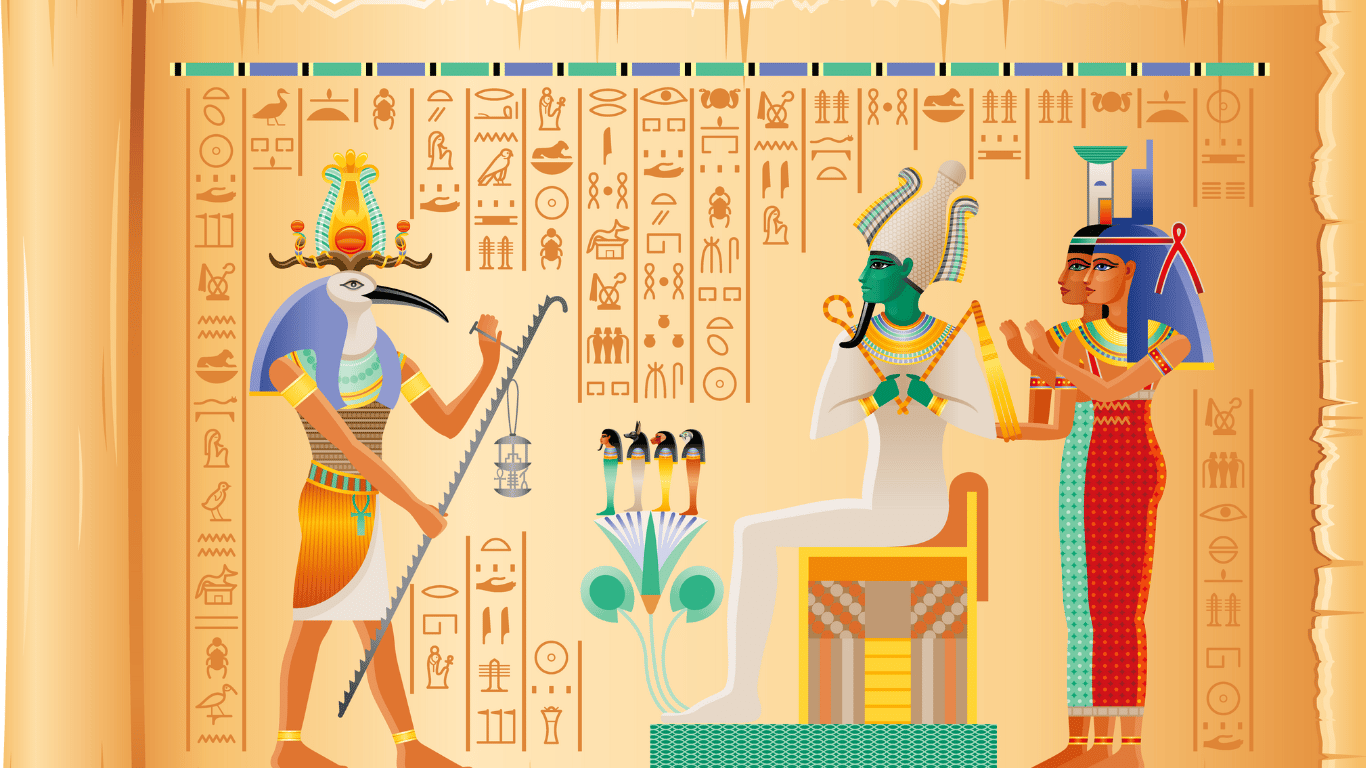
One facet of the cedar’s significance lay in its association with fertility and rebirth. Ancient Egyptians believed that this sacred tree possessed the power to bestow new life upon the departed. The cedar was linked to Osiris, the god representing the realm of the afterlife and resurrection. A myth recounts the tale of Osiris’ demise at the hands of his brother Seth, who dismembered his body and scattered the pieces across the land. In her relentless pursuit, Isis, Osiris’ wife, discovered his remains nestled within a cedar tree. With her mystical abilities, she skillfully reassembled and resurrected him, breathing life once more into his being.

The cedar tree held a significant role in the concept of rebirth, particularly in the practice of mummification by the ancient Egyptians. Mummification was a preservation technique employed to ensure the body’s integrity in the afterlife. To achieve this, a combination of substances like natron, resin, spices, and oils were utilized to desiccate and embalm the corpse. Among these oils, cedar oil possessed remarkable properties that served as an effective deterrent against bacteria and fungi. Its implementation prevented decomposition and bestowed a pleasant fragrance upon the body.

Moreover, the cedar tree was revered for its protective qualities against malevolent spirits. Egyptians harnessed the power of cedar wood in crafting coffins, sarcophagi, and amulets for the deceased. They also burned cedar incense within temples and tombs to cleanse the air and repel negative energies. Considered both potent and sacred, the cedar tree offered safeguarding abilities to the living and the departed alike.

The ancient Egyptians held the cedar in high regard, recognizing its significance beyond being a mere tree. It represented the cycles of life, death, and rebirth, holding a pivotal role in their culture and religion. The cedar was treasured and revered as a natural gift bestowed upon them.

Sumerian Mythology

The tale of Gilgamesh, a narrative that dates back to ancient times, recounts the remarkable exploits of a sovereign from Uruk who embarks on a quest for immortality and renown. One of his extraordinary endeavors involves a bold raid on a revered grove of cedar trees, where he confronts a terrifying monster and incurs the wrath of a god.

In the ancient civilization of Mesopotamia, the Sumerians held the cedar forest in utmost sanctity. They perceived the towering cedar trees as the abode of the Anunnaki, divine entities that governed the natural forces. Among these deities was Enlil, the Master of Wind, who possessed the ability to summon tempests and floods. Enlil served as the patron deity of the cedar forest and its formidable guardian, Humbaba. This creature possessed the head of a lion, the body of a serpent, and razor-sharp teeth.

Gilgamesh, being of mixed divine and mortal lineage, yearned to prove his might and valor by felling a cedar tree and returning it triumphantly to his city. Additionally, he sought to etch his name in the annals of history, driven by his fear of death and being forgotten. Persuading his loyal companion Enkidu, a wild man who had been civilized by a priestess, Gilgamesh embarked on this perilous mission. Armed with axes and swords, they ventured forth into the cedar forest.

Upon entering the forest, their eyes widened in awe at the magnificent trees that towered towards the heavens. The voice of Humbaba echoed through the woods, issuing a dire warning that they would face death if they dared to lay hands on his sacred arboreal realm. Undeterred by his threats, Gilgamesh and Enkidu pressed forward, brandishing their weapons in a fierce assault. They engaged in a prolonged battle until the resolute Gilgamesh managed to inflict a deep wound upon Humbaba with a mighty swing of his axe. Humbaba, realizing the gravity of his situation, pleads for mercy, offering himself as a subservient slave to Gilgamesh. Although tempted to show clemency, Enkidu urged Gilgamesh to deliver a final blow, fearing retribution from Enlil for their audacious act.

Listening to Enkidu’s counsel, Gilgamesh swiftly ended Humbaba’s life with a decisive strike of his sword. Subsequently, he felled the tallest cedar tree and skillfully fashioned it into a sturdy raft. As a testament to their triumph, Gilgamesh took Humbaba’s severed head as a trophy. Together, they embarked on a journey down the flowing waters of the river Euphrates, returning triumphantly to Uruk, where their victory was celebrated and hailed.

Their elation, however, was short-lived, for it wasn’t long before Enlil discovered their transgressions. His anger burned bright as he learned of their slaying of his servant and the destruction of his sacred woodland. In his fury, he placed a curse upon both Gilgamesh and Enkidu and unleashed a cascade of calamities upon them. To further punish them, he dispatched a captivating goddess named Ishtar to seduce Gilgamesh, yet the heroic king spurned her advances. In retaliation, Ishtar released the Bull of Heaven, a monstrous creature that wreaked havoc upon the city of Uruk. Despite this formidable foe, Gilgamesh and Enkidu managed to vanquish the bull, but in doing so, they only intensified Enlil’s wrath.

Convinced that one of them must pay the ultimate price for their crimes, Enlil singled out Enkidu. The loyal companion fell ill and suffered for twelve agonizing days before finally succumbing to death. Gilgamesh was shattered by the loss of his dear friend and comrade. It was then that he realized the fragility of life and the impermanence of his accomplishments. Driven by grief and a newfound awareness of mortality, Gilgamesh set forth on a new quest—to uncover the secret of eternal life.

Thus begins the epic of Gilgamesh—a captivating saga delving into profound themes of friendship, mortality, heroism, and hubris. Through this gripping tale, we gain invaluable insights into the beliefs and culture of the ancient Sumerians, while also exploring the timeless essence of the human condition.

Hinduism

The deodar cedar is a majestic tree that grows in the Himalayan region of India, Nepal, Pakistan, and Afghanistan. It is one of the most sacred trees in Hinduism, as it is believed to embody the qualities of health, wealth, and happiness. The name deodar comes from the Sanskrit word devadaru, which means “wood of the gods”. The deodar cedar is also linked to Shiva, the god of destruction and regeneration, who is said to reside in the Himalayas. Shiva is often depicted with a trident made of deodar wood, and his devotees offer him deodar leaves and flowers as a sign of respect and worship.

The deodar cedar has many uses and benefits for humans and the environment. It is a valuable source of timber, resin, oil, and medicine. It is used for building houses, temples, furniture, boats, and musical instruments. It is also used for making incense, perfumes, cosmetics, and soap. The resin and oil of the deodar cedar have antiseptic, anti-inflammatory, and insecticidal properties. They are used to treat wounds, skin diseases, rheumatism, coughs, colds, and fever. The deodar cedar also helps to purify the air and water by absorbing pollutants and releasing oxygen. It also prevents soil erosion and landslides by stabilizing the slopes of the mountains.

The deodar cedar holds great significance in Hinduism as a representation of spirituality and culture. It is customary to plant this sacred tree near temples and shrines as a symbol of devotion and reverence. Moreover, the deodar cedar plays a role in various rituals and ceremonies, including weddings, funerals, festivals, and yajnas (fire sacrifices). Those who plant or reside near the deodar cedar are believed to be blessed with good fortune, prosperity, and protection. Additionally, it is said that wishes are granted and desires fulfilled for those who offer prayers beneath or touch this magnificent tree.

The deodar cedar demands our utmost respect and care as it holds a sacred place in our lives. It is a precious gift from nature, enriching us in numerous ways. Furthermore, it is a constant reminder of our connection to the divine and our responsibility to preserve the environment. By planting more deodar cedars and safeguarding the existing ones, we pay homage to our ancestors, worship our deities, and secure a brighter future for ourselves and future generations.

The Abrahamic Religions

The cedar of Lebanon, a magnificent tree with a profound and extensive past in the Middle East, holds great reverence among the adherents of Judaism, Christianity, and Islam. It is regarded as a symbol embodying numerous virtues and values within these three Abrahamic religions. In the following article, we shall delve into the various references to and applications of the cedar of Lebanon within these religious traditions.

Judaism

The cedar of Lebanon holds a significant position within Jewish tradition, as it served as the primary material for constructing the Temple of Solomon in Jerusalem, the holiest site for the Jewish people. According to biblical accounts, King Solomon dispatched messengers to King Hiram of Tyre, a trusted ally and friend, to request cedar wood from Lebanon for his ambitious temple project. Hiram graciously acquiesced and mobilized many workers to fell the majestic cedars and transport them to Jerusalem. The Bible vividly portrays the temple as a magnificent edifice adorned with opulent embellishments of gold, silver, precious gems, and cedar wood. The cedar wood was skillfully employed in fashioning the doors, beams, pillars, and the cherubim that stood sentinel over the ark of the covenant

The cedar of Lebanon is also mentioned in several other passages in the Bible, often as a metaphor for greatness, nobility, splendor, and righteousness. For example, Psalm 92:12, says: “The righteous shall flourish like the palm tree: he shall grow like a cedar in Lebanon”. Ezekiel 31:3-5, it compares the glory of Pharaoh and Egypt to a cedar of Lebanon: “Behold, the Assyrian was a cedar in Lebanon with fair branches, and with a shadowing shroud, and of an high stature; and his top was among the thick boughs… Therefore his height was exalted above all the trees of the field, and his boughs were multiplied, and his branches became long because of the multitude of waters, when he shot forth”. In Song of Songs 5:15, it praises the beloved’s legs as “pillars of marble, set upon sockets of fine gold: his countenance is as Lebanon, excellent as the cedars”.

Christianity

The cedar of Lebanon is also respected and admired by Christians, who regard it as a symbol of Christ and his church. In the New Testament, Jesus is called the “branch” or the “shoot” that comes from the root of Jesse, the father of King David. This refers to the prophecy in Isaiah 11:1-2, which says: “And there shall come forth a rod out of the stem of Jesse, and a Branch shall grow out of his roots: And the spirit of the Lord shall rest upon him”. Some Christian interpreters see this branch as a cedar of Lebanon, which represents the royal lineage of David and the messianic hope of Israel. Jesus is also compared to a cedar of Lebanon in his strength, beauty, durability, and fragrance.

The cedar of Lebanon is also seen as a symbol of the church, which is built on the foundation of Christ and his apostles. The church is described as a “spiritual house” or a “holy temple” that is made of living stones (1 Peter 2:5; Ephesians 2:19-22). The church is also called the “body of Christ” or the “bride of Christ” that is adorned with grace and glory (1 Corinthians 12:27; Revelation 21:9-11). The cedar wood that was used for Solomon’s temple can be seen as a foreshadowing of the church that was built by Christ and filled with his presence.

Islam

The cedar of Lebanon is also honored and appreciated by Muslims, who consider it a symbol of purity, dignity, generosity, and faith. In the Quran, the cedar is mentioned twice, both times about paradise. In Surah 56:27-33, it says: “And those foremost (in faith) will be foremost (in paradise). These will be those nearest to Allah. In gardens of bliss… Reclining on raised couches; they will see there neither (burning) sun nor (freezing) cold. And near above them are its shades… And among its (fruits) are those having husk closed tightly (like date-stones). And among its (fruits) are those having husk open loosely (like banana). And among its (fruits) are those having no husk at all (like grapes). And among its (trees) are those having thorns (like citrus). And among its (trees) are those having no thorns at all (like figs). And among its (trees) are those having fragrance (like jasmine). And among its (trees) are those having no fragrance at all (like cedars)”. In Surah 80:24-32

As you can see, the cedar tree has many meanings and associations across different cultures and beliefs. It is a tree that inspires awe and respect for its beauty, longevity, and symbolism. The cedar can teach us many lessons about life, such as how to be strong yet flexible; how to be grounded yet open; how to be wise yet humble; and how to be peaceful yet powerful.

Leave a Reply

Axis Mundi: Connecting the Realms of Existence Part 2

Part 2: The Axis Mundi in Ancient Mythology and Cultures

 The World Tree of the Endo-Europeans

The concept of the world tree is a prevailing symbol found in various cultures throughout the world, particularly within those that are part of the Indo-European linguistic and cultural lineage. The Indo-European people, who trace their roots back to the Pontic-Caspian steppe region north of the Black Sea during the 4th millennium BCE, have disseminated across Europe and Asia, carrying with them their languages, myths, and belief systems. The Indo-European family encompasses several prominent branches such as Celtic, Germanic, Baltic, Slavic, Armenian, Albanian, Greek, and Anatolian. These diverse branches have contributed to the rich tapestry of cultural narratives and spiritual traditions associated with the world tree motif.

One of the shared beliefs among various Indo-European cultures was the profound veneration for a sacred tree, typically an oak, that symbolized the world tree. This majestic tree served as a colossal link between the celestial realm, the earthly realm, and the underworld. It embodied the concept of an axis mundus, a central pillar that bestowed order and harmony upon the entire cosmos. The world tree was often associated with the mighty forces of thunder and lightning, as well as fertility and sovereignty. Moreover, it was regarded as a wellspring of wisdom and oracular potency, believed to be inhabited by ethereal beings or deities.

In Greek mythology, for instance, Zeus established his oracle at Dodona, where priests interpreted the mystical whispers of the oak leaves. In Celtic mythology, the druids conducted their sacred ceremonies within hallowed groves of oak trees. Similarly, in Germanic mythology, Odin suspended himself from an ash tree known as Yggdrasil to attain profound insights into the secrets of the runes.

These various mythological traditions illustrate a common thread of reverence towards the world tree, which served as a focal point for spiritual connection and divine communication. It exemplifies how ancient cultures perceived nature as imbued with profound significance and sought to connect with the spiritual realm through their sacred trees. The world tree represents not only a physical entity but also a gateway to higher realms of knowledge and understanding. By embracing this belief, these cultures acknowledged the interconnectivity between the natural and supernatural worlds and found solace in the wisdom bestowed upon them by these sacred trees.

In Indo-European mythology, the world tree played a crucial role by serving as a cosmic connector between various realms of existence. Positioned at the pinnacle of the tree was the sky, home to the gods and celestial entities. On the earthly plane, the trunk of the tree stood tall, providing a habitat for humans and animals. Delving deep into the underworld, the roots of the tree reached out to where the deceased and otherworldly creatures resided. As a result, the world tree acted as a bridge between these different domains, facilitating communication and serving as a means of transportation for both deities and heroic figures.

Some examples of world trees in Indo-European mythology are:

In Norse mythology, there exists Yggdrasil, a majestic ash tree that stands at the very heart of the cosmos. This ancient tree boasts an astounding nine realms nestled within its sprawling branches and far-reaching roots. Within the realm of Yggdrasil, one can find a diverse array of creatures, including the majestic eagle known as Hraesvelgr, the fearsome dragon named Nidhogg, and the mischievous squirrel known as Ratatoskr.

Moving on to Germanic mythology, we encounter the revered Irminsul, a sacred pillar or tree that held great significance for the Germanic tribes. It served as a potent symbol of their deity, Irmin, and was believed to support both the heavens and the earth. Unfortunately, this sacred structure met its tragic demise at the hands of Charlemagne during his campaign against the Saxons.

Lastly, we explore the mystical World Oak, a sacred tree that features prominently in Slavic, Baltic, and certain Celtic mythologies. This majestic tree finds itself intimately connected to Perun, the mighty thunder god who wields his lightning to ignite fire upon it. Additionally, the World Oak serves as the dwelling place of Veles, the enigmatic god of the underworld, who often takes on the form of a serpent or a dragon.

 Native American Mythology

In the realm of Native American mythology, the concept of the axis mundi takes on various interpretations and manifestations, greatly influenced by the specific culture and region in question. For instance, within certain Pueblo communities like the Hopi and Zuni, the axis mundi is regarded as the sacred site where their ancestors first emerged from the depths of the underworld into the earthly realm. This hallowed place is distinguished by a minute aperture or sipapu positioned at the very heart of a circular subterranean space known as a kiva, which serves as a venue for religious rituals and ceremonies. Symbolically, the sipapu embodies both the origin and perpetuity of life, while also serving as a conduit for communication with the ethereal realm.

In contrast, other Native American societies such as the Maya and Aztecs associate the axis mundi with a cosmic tree. That spans the three realms of existence: the underworld, the earthly domain, and the celestial heavens. This celestial tree is often depicted with roots that delve into the depths of the underworld, a trunk that upholds the earth, and branches that extend toward the heavens. Additionally, this sacred tree possesses four cardinal directions that correspond to four distinct colors, four representative animals, and four revered deities. The cosmic tree symbolizes the innate order and harmony that permeate the cosmos, while also encapsulating the cyclical nature of life and death.

Pyramids were constructed by various civilizations in Mesoamerica, including the Maya, the Aztecs, and the Teotihuacan. These towering structures served not as burial sites, but as sacred temples and ceremonial platforms. Each pyramid was dedicated to specific deities or natural elements, such as the sun, moon, rain, or corn. Moreover, these pyramids held profound significance to the passage of time and the intricate calendar systems of the Mesoamerican cultures, such as the Long Count and Tzolkin. Among the most awe-inspiring pyramids in Mesoamerica are the Pyramid of the Sun and the Pyramid of the Moon in Teotihuacan. These majestic structures align with the Avenue of the Dead and serve as markers for the solstices. Additionally, the Temple of Kukulkan in Chichen Itza exhibits a remarkable phenomenon during the equinoxes, where a shadow resembling a serpent descends from its steps.

The axis mundus embodies more than just a representation of cosmology; it also holds significance in the realms of spirituality and psychology. It serves as a testament to the human pursuit of unity and transcendence while highlighting the interconnection between various facets of our being. The axis mundi beckons us to delve into the depths of our subconscious, nurturing our essence, and extending our aspirations towards untapped heights. Moreover, it serves as a reminder that we are an integral part of a grander existence, one that encompasses both the natural world and the ethereal realm.

Ancient Egypt

In the ancient mythology and culture of Egypt, the axis mundi were connected to various symbols and concepts. One such symbol was the Tree of Life, a sacred acacia tree depicted as growing on the original mound of creation. This Tree of Life served as the trunk of the world pillar, or axis mundi, supporting the sky while connecting it to the Earth. Not only did the Tree of Life provide nourishment and protection to the gods, but it also offered solace to the souls of the departed. According to certain legends, the Tree of Life was safeguarded by a serpent named Apep, whose aim was to obliterate it and unleash chaos upon the world.

Another symbol associated with the axis mundi in ancient Egypt was the Djed pillar, an artistic representation of a human spinal column. The Djed pillar held great significance as it was linked to Osiris, the god of death and rebirth, who was often referred to as “the lord of the Djed”. This pillar symbolized Osiris’s ability to restore life and stability to the world following his murder at the hands of his brother Set. Additionally, the Djed pillar represented endurance, stability, and regeneration. It was frequently erected during festivals and ceremonies to ensure the prosperity and well-being of both the ruler and the kingdom.

 One of the significant symbols of the axis mundi in ancient Egypt was the pyramid, a grand structure created as a burial site for the pharaohs and their partners. The pyramid was meticulously designed to mirror the shape of the primordial mound, from which the god Atum emerged from the chaotic waters. Additionally, the pyramid represented the radiant beams of the sun, which were perceived as a physical embodiment of divine power and benevolence. Aligned with the four cardinal directions, the pyramid’s apex pointed towards the pole star, an esteemed celestial reference point. As such, the pyramid served as a bridge connecting the earthly realm to the heavens, acting as a gateway for the pharaoh’s soul to ascend to the afterlife.

The concept of the axis mundi in ancient Egyptian mythology and culture reflected their comprehensive understanding of the cosmos, emphasizing equilibrium, organization, and unity. This symbolic axis embodied their profound connection with their deities, ancestors, and surroundings. Furthermore, it expressed their aspirations for eternal existence and cosmic equilibrium.

Ancient Greece

One of the most prominent illustrations of the axis mundi in ancient Greece was Mount Olympus, the abode of the deities. Mount Olympus, towering as the highest mountain in Greece, was perceived as the domain where Zeus and his divine family governed over the entire cosmos. The mountain also served as the backdrop for numerous myths and legends, including the Titanomachy (the celestial conflict between the gods and the Titans), the Gigantomachy (the battle between the gods and the giants), and the Twelve Labors of Heracles. Mount Olympus held a sacred status, barring human entry without authorization, and serving as the stage for divine occurrences.

Delphi, another exemplary axis mundi in ancient Greece, was recognized as the oracular center of the world. Situated on the slopes of Mount Parnassus, Delphi was where the renowned oracle of Apollo dispensed prophecies and counsel to kings, heroes, and pilgrims. Delphi was often referred to as the omphalos (navel) of the world, as legend had it that Zeus had released two eagles to fly across the earth and mark its center at this very location. Delphi provided a conduit for humans to access divine wisdom and guidance, while also hosting significant rituals and festivals.

 One instance of the axis mundi in ancient Greece can be found in the Parthenon, a temple dedicated to Athena located on the Acropolis of Athens. Constructed during the 5th century BC, the Parthenon served as a representation of Athenian democracy, culture, and power. Moreover, it stood as a tribute to Athena, the patron goddess of Athens, who was believed to have bestowed the city with its name and its emblematic olive tree.

As an architectural and artistic masterpiece, the Parthenon was adorned with sculptures and friezes depicting various scenes from Greek mythology and history. It served as a sacred space where individuals could pay homage to Athena and celebrate their accomplishments.

These examples are just a glimpse into how the axis mundi concept permeated ancient Greek mythology and culture. The axis mundi allowed the Greeks to express their worldview, values, and connection with the divine. Furthermore, it served as a wellspring of inspiration, eliciting feelings of reverence and amazement within them.

Sumerian

In the realm of Sumerian mythology and culture, the axis mundi found its most notable manifestation in the form of the ziggurat. This awe-inspiring structure, reminiscent of a stepped pyramid, served both as a temple and a platform for worship. Acting as an artificial mountain, the ziggurat symbolized the sacred harmony of the cosmos and served as a vital link between the celestial and terrestrial realms. The Sumerians firmly believed that their deities resided in the heavens above, and by constructing these magnificent ziggurats, they sought to bring their gods closer to the mortal plane.

The ziggurat also played a crucial role as a site for various rituals, sacrifices, and offerings, all carried out in reverence to the gods and to secure their blessings and protection. Only the priests were granted access to the pinnacle of the ziggurat, where they engaged in communication with the divine through prayers, incantations, and divination. Moreover, the ziggurat functioned as a symbol of political authority and dominion, showcasing the king’s prowess in erecting monumental edifices and maintaining an intimate connection with the gods.

 One of the most ancient and renowned ziggurats was the White Temple of Uruk, which was devoted to Anu, the god of the sky and the supreme deity in the Sumerian pantheon. Constructed approximately 3000 BCE, the White Temple stood upon a sacred precinct named Kullaba, regarded as the epicenter of the world. The temple was fashioned from mud bricks that were coated in a layer of whitewash, bestowing upon it an awe-inspiring radiance. Its foundation took on a rectangular shape, measuring around 45 by 50 meters, while soaring to a height of roughly 12 meters. Positioned at each corner were four sides that aligned precisely with the cardinal directions, accompanied by a staircase leading to a small shrine atop the structure.

Another remarkable illustration of a Sumerian ziggurat is the Chogha Zanbil complex, erected by King Untash-Napirisha of Elam circa 1250 BCE. This complex comprised five ziggurats encircling a central one dedicated to Inshushinak, the primary god of Elam. The central ziggurat stood at an impressive height of approximately 53 meters and possessed three tiers, each housing a temple. Alongside the ziggurats, the complex encompassed palaces, royal tombs, and various other edifices. Adorned with glazed bricks depicting animals, plants, and intricate geometric patterns, these ziggurats exhibited exquisite craftsmanship.

Conclusion

The notion of axis mundi, or the central axis of the world, is a prevalent theme seen across numerous mythologies and cosmologies. It symbolizes the interconnectedness between various realms of existence, encompassing celestial planes, earthly domains, and the depths of the underworld. The axis mundi can manifest in different forms, be it a towering mountain, a majestic tree, an imposing pillar, a transcendent ladder, or even a sacred cross. Its purpose often revolves around serving as the epicenter of the world, a conduit for divine energy, and a sacred space for communication with deities.

The axis mundi not only holds physical significance but also carries immense symbolic and spiritual weight. It encapsulates the idea that there exists an underlying order and harmony within the universe, accessible to humans through ritualistic practices, meditative states, or transformative pilgrimages. Furthermore, the axis mundi mirrors humanity’s innate yearning to transcend the limitations imposed by the mundane world, aspiring to attain heightened levels of consciousness and existence.

In essence, the axis mundus represents a profound and enlightening concept that delves into the intricate workings of the cosmos. It unveils the existence of hidden truths and beckons individuals to embark on a journey toward self-discovery, spiritual enlightenment, and an expanded understanding of their place within the vast tapestry of creation.

The End

Leave a Reply

Axis Mundi: Connecting the Realms of Existence Part 1

Part 1: The Axis Mundi in Religions

A fascinating concept is the Axis Mundi. Merriam-Webster dictionary sums it up to this.

axis mundi Latin noun phrase.

  World axis or stem through the earth’s center connecting its surface to the underworld and the heavens around which the universe revolves.

The concept of Axis Mundi extends far beyond the mere definition provided earlier. Throughout history, it has exerted a profound influence on diverse cultures worldwide, spanning from ancient times to the present day. Axis Mundi, a term denoting “the center of the world” or “the connection between heaven and earth,” holds great significance. It encompasses the idea of a cosmic axis that links the celestial and terrestrial realms or the higher and lower planes of existence. Symbolizing both the center of the world and the harmony of the universe, the axis mundus finds representation in various forms and locations across numerous religions and cultures. Mountains, trees, pillars, ladders, and other objects serve as embodiments of this central point of cosmic order.

The concept of the axis mundi holds significance in both religion and mythology, intertwining in various ways. It serves as a symbol, bridging the gap between the mortal and the divine, the earthly and the celestial, the ordinary and the sacred. In essence, it signifies the profound belief that our reality extends beyond what is readily perceived or experienced in our everyday lives. It suggests the existence of a higher cosmic order or purpose that governs the universe. Moreover, it provides a means of accessing this higher reality, whether through physical or spiritual journeys along the axis mundi or by manifesting the presence or power of the divine within our realm.

 Various religions interpret and symbolize the axis mundi in distinct ways, influenced by their cultural and historical backgrounds, theological beliefs, and ceremonial traditions. Certain religions may emphasize a particular form of axis mundi or blend various types into a multifaceted symbol. Additionally, some religions may possess multiple axes mundi or alter their representation of the axis mundi over time. For instance, throughout different periods and locations, Christianity has employed the cross, the church, and Jerusalem as distinct axes mundi. Each of these manifestations reflects the significance and sacredness attributed to these symbols within the Christian faith.

The Axis Mundi in Religions

Hinduism

In Hinduism, the concept of axis mundi is frequently linked to Mount Meru, a legendary mountain believed to be the highest point in the entire universe and the dwelling place of divine beings. Mount Meru serves as the central figure in the cosmic mandala, a symbolic diagram that represents the structure and harmony of the cosmos. This mandala consists of four continents surrounding Mount Meru, each with its sub-continents, oceans, rivers, mountains, and trees. Additionally, the mandala includes seven celestial realms situated above Mount Meru and seven realms of damnation located below it. The entirety of the mandala is upheld by a cosmic serpent known as Shesha.

Mount Meru carries significance not only as a physical location but also as a symbol of spiritual enlightenment. It embodies the axis of dharma, which encompasses the universal order connecting all beings and levels of existence. Furthermore, it represents the goal of moksha the liberation from the perpetual cycle of rebirth. To reach Mount Meru, individuals must overcome a series of obstacles and temptations, such as desire, anger, greed, ignorance, pride, and envy. Only those who possess purity of mind and heart can ascend to Mount Meru and bask in the divine bliss experienced by the gods.

 How is Axis Mundi Expressed in Hinduism?

Axis Mundi is not only expressed through Mount Meru, but also through other sacred mountains, temples, shrines, images, and rituals in Hinduism. For example:

 Mount Kailash serves as another hallowed mountain held in reverence by Hindus, Buddhists, Jains, and Tibetans alike. It is believed to be the divine abode of Lord Shiva, one of the supreme deities within Hinduism. Mount Kailash is also considered to be the origin of four significant rivers: the Indus, the Brahmaputra, the Sutlej, and the Karnali. Pilgrims who embark on a journey to Mount Kailash engage in a ritualistic circumambulation around it, which is believed to bestow spiritual benefits and absolve sins.

 The innermost sanctum of a Hindu temple, known as the Garbhagriha, serves as the sacred space where the primary deity’s image or icon is enshrined. This chamber, typically small and dimly lit, holds deep symbolism as it represents the very womb of creation. Positioned at the heart of the Garbhagriha, the image of the deity serves as the axis mundi, the divine link connecting the earthly realm with the heavens above. Devotees who enter this sacred space are believed to have a direct encounter with the divine presence, fostering a profound spiritual connection.

One of the significant symbols associated with Lord Shiva is the lingam. This emblem consists of a cylindrical pillar topped with a rounded structure, embodying both the masculine and feminine aspects of creation. Furthermore, it represents the cosmic energy that permeates every corner of existence. Often placed on a circular base called a yoni, which symbolizes the female reproductive organ or womb, the lingam and yoni together signify the union of Lord Shiva and his consort Parvati. They also encapsulate the origins and sustenance of life itself. In addition to its symbolic significance, the lingam is also regarded as an embodiment of the axis mundi.

 Yajna is a sacred ritual that involves the act of offering various substances, such as ghee, grains, fruits, flowers, and animals, into a consecrated fire. This fire is perceived as a conduit that carries these offerings to the gods, resulting in their blessings upon humanity. The fire altar or pit where the yajna takes place also symbolizes the axis mundi, serving as a connection point between the celestial realm and the earthly realm. The purpose of the yajna is to establish and maintain harmony and equilibrium among humans, nature, and deities.

Within the context of Hinduism, there are numerous manifestations of the axis mundi. These examples offer glimpses into the diverse traditions and practices within Hinduism where this concept finds expression. It should be noted that axis mundus is not merely an abstract notion but rather a practical tool for spiritual development and personal transformation.

  Buddhism

In the realm of Buddhism, the axis mundi is intricately connected to the concept of the Bodhi tree, the very tree beneath which the Buddha experienced his profound enlightenment. Regarded as a hallowed space, the Bodhi tree serves as a significant marker where the Buddha comprehended the Four Noble Truths and attained nirvana. It symbolizes not only the Buddha’s physical and mental being but also signifies the path to emancipation. Often depicted with a throne or seat at its base, the Bodhi tree signifies the spot where the Buddha engaged in deep meditation. Its branches serve as a representation of his wisdom, compassion, and teachings, while its leaves symbolize his devoted followers and disciples.

In Buddhism, the stupa serves as another illustration of the axis mundi. It takes on the form of a dome-shaped structure that houses sacred relics of the Buddha or other revered beings. Not only does the stupa symbolize the physical and mental aspects of the Buddha, but it also represents the five elements: earth, water, fire, air, and space. The foundation of the stupa signifies his crossed legs during meditation, while the dome represents his head or skull. Additionally, the spire symbolizes his spine or central channel, and the umbrella signifies his crown or state of enlightenment.

Furthermore, the stupa mirrors the architectural layout of Mount Meru, a mythical mountain deemed as the center of the universe in Buddhist cosmology. Encircling the stupa are four gates, each facing a cardinal direction. These gates correspond to the four continents encircling Mount Meru. The stupa, with its complex symbolism and alignment with cosmic principles, serves as a profound representation of Buddhist beliefs and the interconnectedness of all things.

 The notion of the axis mundi in Buddhism can also be applied to the human physique, which is regarded as a miniature version of the cosmos. Within the human body, there exists a central axis that traverses from the apex of the skull to the base of the spinal column, aligning with the spinal cord or sushumna nadi as known in the realm of yoga. This axis serves as a conduit linking the lower and higher chakras, or energy centers, which correspond to various facets of consciousness and reality. Furthermore, the human body can be likened to a stupa, wherein the foundation signifies the legs, the dome symbolizes the head, the spire represents the spine, and the umbrella epitomizes enlightenment.

The axis mundi in Buddhism serves as a means to depict the interconnection among diverse planes of existence and actuality. It stands as a symbol of unity, equilibrium, and integration. Moreover, it serves as a constant reminder of the latent potential for enlightenment that resides within every individual.

Islam

In the Islamic faith, Mecca serves as the utmost sacred center and the true epicenter of spiritual significance. Within Mecca, the haram encompasses the Kabbah, which holds the highest degree of sanctity. Of paramount importance is the Kabbah itself, a cubic edifice that is the initial place of worship constructed by Abraham and Ishmael, dedicated to the one true God.

Moreover, the Kabbah serves as the qibla, the direction that Muslims face during their daily prayers, known as salat. Enveloped by a black cloth known as the kiswa, adorned with golden embroidery of Quranic verses, the Kabbah exudes an aura of reverence and devotion.

Contained within the sacred walls of the Kabbah lies the Hajar al-Aswad, a revered black stone believed to have descended from the heavens. Muslims hold a deep-seated belief that touching or kissing this stone will absolve them of their transgressions and sins.

The spiritual significance of Mecca, with its holy center represented by the Kabbah, serves as a focal point for Muslims around the world. It symbolizes a connection to their faith and acts as a tangible reminder of their devotion and submission to God. The rituals and traditions associated with the Kabbah, and its surroundings form an integral part of Islamic practice, enriching the spiritual journey of believers and fostering a profound sense of spiritual awakening.

 In Islam, there is another illustration of the axis mundi known as the Qutb, a term that signifies ‘axis’, ‘pivot’, or ‘pole’. Within Sufism, the Qutb represents the embodiment of a perfect human being, referred to as al-Insan al-Kamil (‘The Universal Man’), who serves as the leader of the saintly hierarchy. Moreover, the Qutb is regarded as the spiritual axis of his era, acting as a mediator between God and creation. Throughout history, there have been notable individuals who are recognized as Qutb, such as Ali ibn Abi Talib, Hasan al-Basri, Abdul Qadir Jilani, and Jamaluddin Rumi.

One notable example of an Axis Mundi structure in Islam can be found in the Dome of the Rock, located in Jerusalem. This magnificent shrine was built above a rock that is believed to have been the site where Prophet Muhammad ascended to heaven during his night journey, known as the Israel and Mi ‘raj. The significance of this rock extends further, as it is also associated with the biblical account of Abraham’s willingness to sacrifice his son (either Ishmael or Isaac, depending on the source), as well as being linked to the location of Solomon’s temple.

The Dome of the Rock stands as a testament to Islamic art and architecture, boasting a grand golden dome, intricate mosaic artwork, and inscriptions from the Quran. Situated within the Haram al-Sharif, also known as the Noble Sanctuary, this sacred site holds deep meaning for Jews and Christians in addition to its importance within Islam.

Such architectural marvels exemplify how Islam expresses its devotion to God and reverence for His prophets. These Axis Mundi buildings serve not only as places of worship but also as embodiments of history, culture, and spirituality. They reflect the cosmic order and harmony that Islam seeks to embody and offer visitors a profound connection to the divine through their awe-inspiring beauty and sacred significance.

 Christianity

In the realm of Christianity, the axis mundi is the focal point where the presence and benevolence of God are most readily accessible to mankind. It serves as the conduit through which humans can establish a direct line of communication with the divine and receive divine revelations. The axis mundi is not a fixed physical location but rather a fluid and dynamic concept that is contingent upon God’s will and human response. This profound concept can be perceived as both vertical and horizontal, forging a connection between heaven and earth while also encompassing the realms of the past, present, and future.

Within the Christian faith, one of the most significant manifestations of the axis mundi is embodied in the form of the cross. The cross symbolizes both Jesus’ sacrificial death and subsequent resurrection, providing humanity with a pathway to reconciliation with God and entrance into His eternal kingdom. Moreover, the cross holds cosmic implications within Christianity, representing the tree of life in the Garden of Eden and the tree of knowledge of good and evil that led to humanity’s fall from grace. Furthermore, the cross symbolizes the human form itself, which bears the imprint of God’s likeness and is redeemed through Christ’s ultimate act of sacrifice.

 In Christianity, another significant axis mundi is found in the form of the Mount of Olives. This sacred place holds great significance as it was the site where Jesus ascended to heaven following his resurrection, with a promise to return in glory. Additionally, the Mount of Olives served as a location where Jesus engaged in fervent prayer before his arrest, shed tears over Jerusalem, and imparted teachings to his disciples regarding the end times. Furthermore, this holy mount is connected to other pivotal events mentioned in biblical texts, including David’s escape from Absalom, Elijah’s ascent to heaven, and Zechariah’s prophetic vision of the Messiah.

Another axis mundi of utmost importance in Christianity is Calvary, also known as Golgotha. Which translates to “the place of the skull.” This hill, situated outside Jerusalem, holds immense significance as it was the exact location where Jesus was crucified, thus fulfilling numerous prophecies outlined in the Old Testament. It is believed that Calvary is also the burial site of Adam’s skull, representing the profound connection between the first and last Adam. Moreover, Calvary stands as a poignant reminder of Abraham’s willingness to sacrifice his son, Isaac, serving as a foreshadowing of God’s ultimate sacrifice of His own Son.

These sacred sites, the Mount of Olives and Calvary, hold immense spiritual and historical importance within Christianity. They serve as reminders of pivotal moments in the life of Jesus and are laden with symbolism that deepens understanding of faith and salvation.

How is the Axis Mundi Expressed in Christian Art, Architecture, and Literature?

The axis mundus has inspired many forms of artistic expression in Christianity. For example:

In the realm of Christian art, the axis mundi is frequently portrayed as a radiant halo resembling an almond shape that encircles Christ or other revered figures. This halo serves to symbolize the juncture of heaven and earth, as well as the harmonious coexistence of the divine and human aspects within Christ.

Within the realm of Christian architecture, the axis mundus finds its representation in the form of a spire or steeple, towering structures that ascend above churches or cathedrals. These majestic spires direct our gaze towards the celestial realm, while simultaneously drawing our attention to the hallowed space below. Often adorned with a cross or a weathervane atop, these spires serve as powerful symbols of Christ’s triumphant victory over death and sin.

In Christian literature, the concept of the axis mundi is often depicted as a transformative journey, serving as a metaphor for spiritual development and progress. This expedition might entail scaling towering mountains, traversing sturdy bridges, venturing into mysterious caves, or navigating along well-trodden paths. Throughout this odyssey, one may encounter formidable obstacles, adversaries to overcome, supportive allies, or wise mentors offering guidance.

The axis mundus stands as a profound symbol that encapsulates the Christian faith’s conviction regarding God’s omnipresence and active involvement in the world. It also mirrors the innate human longing to establish a deep connection with the Divine and encounter His boundless grace. Within Christianity, the axis mundi manifests itself in diverse forms and contexts, each shedding light on distinct facets of God’s nature and His grand design for humanity.

Judaism

In Judaism, various instances of the axis mundi can be found in different contexts.

One illustration of this is the Temple Mount in Jerusalem, which holds immense significance as the holiest site in Judaism and as the abode of God’s presence. According to Jewish tradition, the Temple Mount is not only the place where Isaac was bound, but it is also where the first and second temples stood, and where the third temple will be constructed in the future. Additionally, the Temple Mount is believed to be the center of the world, serving as the starting point of creation and the location of God’s throne. As a result, it functions as an axis mundus, connecting the earthly and celestial realms, and serves as a central hub for worship and prayer.

Another example is found in the Torah, which serves as the sacred scripture of Judaism and encompasses the five books of Moses. The Torah is regarded as divine wisdom and guidance, being perceived as the word of God. It is also seen as a living entity, possessing both a soul and a voice. Consequently, the Torah functions as an axis mundus, bridging the gap between humanity and divinity.  Acting as a conduit for revelation and communication.

 One example that showcases the concept of the axis mundi in Judaism is the tzaddik, a term denoting a righteous or saintly individual. In Judaism, a tzaddik is someone who has achieved a profound level of spiritual excellence and closeness with God. Moreover, a tzaddik possesses the ability to intercede on behalf of others and serve as a conduit for divine blessings and healing. Therefore, the tzaddik functions as a bridge between the ordinary and sacred realms, embodying the axis mundi and facilitating the flow of grace and mercy.

Judaism employs various methods to convey the idea of the axis mundi within its religious beliefs and practices. The axis mundus symbolizes humanity’s innate longing to transcend the limitations of this earthly realm and connect with a higher reality that exists beyond it. Through the concept of the tzaddik, Judaism emphasizes the significance of spiritual attainment, divine intervention, and the bridging of mortal existence with the divine realm. This portrayal of the axis mundi in Judaism serves as a testament to the profound yearning for enlightenment and transcendence that permeates the tradition.

The Rest will be continued in Part 2

Leave a Reply

The Concept of The World Tree in Ancient Indo-European Cultures 

The world tree is a powerful symbol that appears in many religions and mythologies, especially among the Indo-European peoples. The world tree represents the cosmic order, the connection between the heavens, the earth and the underworld, and the source of wisdom and life. I will explore discuss some examples of how the world tree was conceived and revered by different ancient European cultures, such as the Norse, the Germanic, the Celtic, the Slavic, the Baltic, and the Finnish. 

The Norse World Tree: Yggdrasil 

One of the most famous examples of the world tree is Yggdrasil, the immense ash tree that stands at the center of the Norse cosmos. According to the Prose Edda, a 13th-century collection of Norse myths, Yggdrasil has three roots that reach into three different realms: Asgard, the home of the gods; Jotunheim, the land of the giants; and Niflheim, the realm of ice and mist. At the base of each root, there is a well or a spring that holds a secret knowledge: Urd’s Well, where the Norns (the fates) weave the destiny of all beings; Mimir’s Well, where the god Odin sacrificed one eye to gain wisdom; and Hvergelmir, where the dragon Nidhogg gnaws at the root. 

Yggdrasil also has nine branches that correspond to the nine worlds of Norse mythology. The highest branch reaches into Asgard, where Odin’s hall Valhalla is located. The lowest branch extends into Hel, the underworld where the dead dwell. Between them are Midgard, the world of humans; Alfheim, the world of elves; Vanaheim, the world of fertility gods; Svartalfheim, the world of dwarves; Muspelheim, the world of fire giants; and Nidavellir, the world of dark elves. On top of Yggdrasil sits an eagle that represents the sky, and between its eyes is a hawk named Vedrfolnir. At the bottom of Yggdrasil is a serpent named Jormungandr that encircles Midgard and represents the sea. The eagle and the serpent are enemies and exchange insults through a squirrel named Ratatosk that runs up and down the tree. 

Yggdrasil is not only a physical structure but also a living being that suffers and bleeds. It is constantly under attack by various creatures that try to damage it: Nidhogg and other serpents at its roots, four stags that eat its leaves, and countless insects that bore into its bark. The gods try to protect and nourish Yggdrasil by sprinkling it with water from Urd’s Well every day. Yggdrasil is also a source of oracles and visions for those who seek them. Odin hanged himself from one of its branches for nine nights to learn the secrets of the runes, and Heimdall, the watchman of the gods, can see everything that happens in the nine worlds from his seat at the top of Yggdrasil. 

The Germanic World Tree: Irminsul 

Irminsul was a sacred symbol of the Saxons, an ancient Germanic tribe that lived in northern Europe. Irminsul means “great pillar” in Old Saxon, and it was a pillar-like object that represented the center of the world and the connection between heaven and earth. Some sources describe Irminsul as a tree trunk erected in the open air, while others suggest it was a stone structure or a tower. 

Irminsul played an important role in the Germanic paganism of the Saxons, who worshipped it as a symbol of their god Irmin. Irmin was possibly an aspect or epithet of Odin, the chief god of the Norse pantheon, who was also known as Jörmunr or Yggr. Odin sacrificed himself on Yggdrasil, the cosmic tree that connected the nine worlds in Norse mythology. Yggdrasil and Irminsul may have been related concepts, as both were seen as world trees that sustained the universe. 

Irminsul was located near Heresburg (now Obermarsberg) in Germany, where it was a site of pagan rituals and sacrifices. However, in 772 AD, during the Saxon Wars, Irminsul was destroyed by Charlemagne, the king of the Franks and a Christian convert. Charlemagne wanted to spread Christianity among the Saxons and eliminate their pagan beliefs. He ordered the demolition of Irminsul and built a church in its place, which was blessed by Pope Leo III. 

The destruction of Irminsul was a major blow to the Saxon culture and religion, and it marked the beginning of their forced conversion to Christianity. Irminsul remains a mysterious and fascinating symbol of the ancient Germanic worldview and spirituality. 

The Celtic World Tree: Bile 

The World Tree is often depicted as a mighty oak, a tree that was revered by the ancient Celts for its strength, longevity, and nobility. But did you know that there is another World Tree in Celtic lore, one that is associated with the underworld and the dead? This is the tree of Bile, a mysterious god who was both an ancestor and a guide of the Irish people. 

Bile (pronounced Bee-LEH) was a king of Galicia, a region in northwestern Spain that shares some cultural and linguistic ties with Ireland. He was the son of Breogan, another Galician king who built a great tower that could be seen across the sea. From this tower, Bile’s son Ith spotted the green island of Ireland and decided to sail there with some of his kin. However, he was killed by the Tuatha De Danann, the magical race that ruled Ireland at the time. Bile’s other son, Milesius, avenged his brother’s death and conquered Ireland with his followers, who became known as the Milesians or the Gaels. 

But Bile was not just a human king. He was also a god, or at least a divine ancestor, who had a special relationship with the goddess Danu, the mother of the Tuatha De Danann. According to some sources, Bile and Danu were lovers who met every year at Beltaine, the festival of fire and fertility that marks the beginning of summer. Danu asked Bile to help her with a problem: the spirits of the dead were roaming the land, causing trouble and distress to the living. She asked him to lead them to the otherworld, where they could rest in peace. Bile agreed, but only on the condition that he could return to Danu once a year. 

Danu turned Bile into a tree, which is what his name means in Irish. This tree was not an oak, but a different kind of tree that grew on an island in the western sea. This tree was the World Tree of Bile, the gateway to the underworld. The spirits of the dead would climb its branches and descend to the realm of Bile, where he would welcome them and judge them according to their deeds in life. Bile shared his throne with three goddesses: Eire, Banba, and Fodla, who represented different aspects of Ireland. Eire was chosen as the main patroness of the land by Bile and his people. 

Bile’s World Tree was not only a passage for the dead, but also a source of wisdom and inspiration for the living. The druids, the priests, and poets of the Celts, would visit the tree and listen to its whispers, learning secrets of magic and prophecy. The tree also bore nuts that contained mystical knowledge, similar to the hazel nuts that grew near the Well of Wisdom in Ireland. 

Bile’s World Tree is a fascinating symbol that shows us how the Celts viewed life, death and rebirth. It shows us that they honored their ancestors and respected their gods. It shows us that they valued balance and harmony between the natural and supernatural worlds. And it shows us that they sought wisdom and inspiration from nature and its cycles. 

The Baltic, Slavic, and Finnish World Tree 

The Baltic, Slavic, and Finnish world tree is usually an oak, which is a symbol of strength, longevity and sacredness. The oak is also associated with thunder gods, such as Perkūnas in Baltic mythology, Perun in Slavic mythology, and Ukko in Finnish mythology. These gods are responsible for maintaining the balance and harmony of the cosmos and often use lightning bolts to strike down evil forces that threaten the world tree. 

The world tree in these traditions is often depicted as inverted, meaning that its roots are in the sky and its branches are in the ground. This may reflect the belief that the sky is the source of life and water, while the earth is the realm of death and decay. The inverted world tree may also symbolize the cyclical nature of existence, as the leaves fall from the sky to nourish the soil, and new sprouts grow from the earth to reach the heavens. 

The world tree is also inhabited by various creatures that represent different aspects of the world. On the top of the tree, there is usually an eagle or another bird that represents the sky, the sun, and the supreme deity. The eagle often has a conflict with a snake or a dragon that lives at the bottom of the tree, representing the underworld, chaos, and evil. The snake tries to gnaw at the roots of the tree, while the eagle tries to stop it. Sometimes, there is also a squirrel or another animal that runs up and down the trunk of the tree, carrying messages or insults between the eagle and the snake. 

The world tree is also surrounded by other trees or plants that have their meanings and functions. For example, in Slavic mythology, there is a golden apple tree that grows near the world tree and provides immortality to those who eat its fruits. The apple tree is guarded by three goddesses called Zoryas, who represent the morning, evening, and midnight stars. In Finnish mythology, there is a rowan tree that grows next to the world tree and protects it from harm. The rowan tree is sacred to Rauni, the goddess of fertility and thunder. 

The world tree is not only a mythological concept but also a cultural and artistic one. Many images of the world tree are preserved on ancient ornaments, such as amulets, bracelets, brooches, and belts. These ornaments were worn by people to show their connection to the world tree and to receive its blessings. The world tree was also carved on wooden objects, such as doors, chests, and pillars, to decorate and protect homes and temples. 

The Baltic, Slavic, and Finnish world tree is a fascinating example of how different cultures can share a similar idea but express it in different ways. The world tree shows us how people imagined their place in the universe, and how they related to nature, gods, and each other. The world tree is also a reminder of how we are all connected by a common root, and how we depend on each other for survival. 

6 responses to “The Concept of The World Tree in Ancient Indo-European Cultures ”

  1. pxhss Avatar

    Fantastic beat I would like to apprentice while you amend your web site how could i subscribe for a blog site The account helped me a acceptable deal I had been a little bit acquainted of this your broadcast offered bright clear concept

    Like

    1. R F Cayea Avatar

      What exactly do you mean By apprentice? You can start a Blog website with WordPress. It would be free but have WordPress in the domain name. That is how I started. I am not a Master to Have an Apprentice, but if you want to work together on something. I might be interested.

      Like

  2. qweqtt Avatar

    Nice blog here Also your site loads up very fast What host are you using Can I get your affiliate link to your host I wish my site loaded up as quickly as yours lol

    Like

    1. R F Cayea Avatar

      I am Glad you like My Blog. Everything done on the website is through wordpress with plugins. I am not using a Hosting service. Besides the WordPress servers.

      Like

  3. LipoSlend Avatar

    For the past few days I’ve been frequently checking out this wonderful site, they produce first-rate content for fans. The site owner works hard to captivate readers. I’m thrilled and hope they continue providing superb material.

    Like

    1. R F Cayea Avatar

      Thank you for your kind words. I am trying to be Motivated to release more stuff. Also, improve the overall design of my website, articles, and other things I do. Please share my website with others who might like it. Follow me on social media if you want. I will try to continue to Do My Best. Keep Seeking Fellow Seeker. You will find!

      Like

Leave a Reply

‘He Walked the Americas’: The Theories and Beliefs Surrounding Jesus Christ’s Alleged Visit to the New World


The legend of “He Walked the Americas” has captivated the minds and hearts of many, sparking debates, theories, and beliefs surrounding the possibility of Jesus Christ’s alleged visit to the New World. This enigmatic tale intertwines religious narratives, historical accounts, and Native American myths, shaping a complex and intriguing tapestry of cultural and spiritual significance. In this comprehensive exploration, the various perspectives, evidence, and implications of this legend will be meticulously examined, shedding light on its enduring impact on modern beliefs and cultural traditions.

There was, also a book I would like to Mention Called “He Walked the Americas” by L, Taylor Hansen, – Lovise Taylor Hansen said she collected The Stories from different Native groups in North, Central, and South America. The book hints that it could have been Jesus or some great prophet of some sort.

The Legend of “He Walked the Americas”

The legend of “He Walked the Americas” originates from the belief that Jesus Christ, after his resurrection, journeyed beyond the familiar lands of the Middle East to spread his teachings in the Americas. This narrative, often intertwined with Native American myths, depicts Jesus as a revered figure who appeared among indigenous peoples, imparting wisdom and guidance. Proponents of this theory point to oral traditions and folklore within Native American communities, where accounts of a divine visitor bearing striking similarities to Jesus Christ have been passed down through generations. These tales often emphasize themes of compassion, peace, and spiritual enlightenment, attributing profound significance to the potential visitation of Jesus to the New World.

The notion of Jesus Christ’s presence in the Americas has also been associated with the exploration of ancient texts and artifacts, particularly within the context of the Book of Mormon and its narrative. The Book of Mormon, considered a sacred scripture by members of The Church of Jesus Christ of Latter-day Saints, presents an account of ancient inhabitants of the Americas and their interactions with a resurrected Jesus Christ. This foundational text has contributed to the proliferation of the belief in Jesus’ visit to the Americas, shaping the perspectives of many individuals and communities regarding the historical and spiritual connections between the Old and New Worlds.

Native American Myths and Legends

The integration of Native American myths and legends into the discourse surrounding Jesus Christ’s alleged visit to the Americas adds a layer of cultural richness and diversity to the enigmatic narrative. Within indigenous traditions, stories of celestial beings and divine messengers have been revered and preserved, reflecting the interconnectedness of spiritual beliefs with the natural world and ancestral heritage. The parallels drawn between the character of Jesus Christ and figures found in Native American mythology illuminate the universal themes of redemption, guidance, and the pursuit of harmony with the cosmos.

The presence of oral traditions and symbolic motifs within Native American cultures provides a compelling framework for exploring the potential intersections between their mythological heritage and the narrative of Jesus’ journey to the Americas. The enduring resonance of these myths serves as a testament to the enduring significance of spiritual narratives in shaping collective identities and fostering a profound sense of interconnectedness with the transcendent realms.

The convergence of Native American myths with the legend of “He Walked the Americas” invites a nuanced examination of the cultural exchanges and spiritual dialogues that have unfolded throughout history, transcending geographical boundaries and temporal constraints. By embracing the diverse narratives and perspectives embedded within indigenous traditions, a more comprehensive understanding of the enigmatic legend emerges, enriching the tapestry of human experiences and spiritual aspirations.

The Book of Mormon and Its Narrative

Central to the discourse surrounding the alleged visit of Jesus Christ to the Americas is the narrative presented in the Book of Mormon, a scripture revered by adherents of The Church of Jesus Christ of Latter-day Saints. This foundational text recounts the account of ancient civilizations in the Americas, their spiritual and political upheavals, and their interactions with a resurrected Jesus Christ following his ministry in the Holy Land. The Book of Mormon weaves together intricate chronicles of faith, conflict, and divine intervention, fostering a profound connection between the Old and New Worlds through the lens of religious revelation.

The narrative of the Book of Mormon has been instrumental in shaping the beliefs and perspectives of millions of individuals, providing a framework for understanding the potential historical and spiritual dimensions of Jesus’ visitation to the Americas. The text’s portrayal of divine manifestations, prophetic teachings, and the establishment of a sacred covenant with the indigenous inhabitants serves as a cornerstone for the interpretation of the enigmatic legend, igniting scholarly inquiries and theological reflections regarding the cultural and religious significance of such a visitation.

Through the lens of the Book of Mormon, the enigmatic narrative of “He Walked the Americas” acquires multifaceted dimensions, intertwining the realms of faith, history, and cultural heritage in a compelling tapestry of spiritual exploration. The scripture’s enduring influence and its portrayal of theophanies in the New World continue to fuel discussions and contemplations regarding the potential implications of Jesus’ alleged presence in the Americas, resonating with individuals seeking to reconcile the intersections of diverse religious traditions and historical narratives.

Historical Accounts and Archaeological Evidence

The exploration of historical accounts and archaeological evidence of the alleged visit of Jesus Christ to the Americas provides a critical lens through which to evaluate the enduring enigma surrounding this legendary narrative. While the legend of “He Walked the Americas” encompasses a blend of religious narratives and oral traditions, the scrutiny of historical records and material remains offers a unique vantage point for discerning the potential veracity of such claims and their implications for understanding the cultural and spiritual dynamics of the Americas.

Historical accounts, predominantly within the context of the Book of Mormon and related scriptures, have been a focal point for proponents advocating the reality of Jesus’ visitation to the New World. These accounts depict interactions between Jesus Christ and the indigenous peoples, highlighting pivotal moments of spiritual enlightenment, communal transformation, and the establishment of sacred teachings. The preservation of these narratives within historical texts serves as a testament to the enduring impact of the alleged visitation on the collective consciousness and religious traditions of various communities.

In parallel, the quest for archaeological evidence of Jesus Christ’s alleged presence in the Americas has sparked investigations and excavations aimed at uncovering tangible manifestations of this enigmatic narrative. The examination of ancient artifacts, inscriptions, and cultural remnants has yielded diverse interpretations, with some scholars positing potential links between Hebrew writings and indigenous cultures in the Americas. The discovery of purported Hebrew inscriptions and linguistic connections has fueled debates and inquiries into the cultural exchanges and migratory patterns that may have shaped the spiritual landscape of the New World.

Uncovering Hebrew Inscriptions in America

The revelation of Hebrew inscriptions and linguistic artifacts in the Americas has emerged as a focal point for scholarly inquiries and speculative interpretations regarding the potential connections between ancient Hebrew traditions and indigenous cultures. The discovery of inscriptions bearing resemblance to Hebrew script has sparked debates and controversies surrounding the implications of such findings for understanding the enigmatic narrative of Jesus’ alleged visit to the New World. These inscriptions, often found in archaeological contexts or embedded within cultural artifacts, have prompted a reevaluation of historical narratives and the potential influences of transoceanic migrations on the spiritual and linguistic tapestry of the Americas.

The examination of Hebrew inscriptions in America invites a multidisciplinary approach, encompassing linguistic analysis, historical contextualization, and the exploration of cultural exchanges between diverse communities. Proponents of the theory linking these inscriptions to the presence of Jesus Christ in the Americas emphasize the potential implications for reshaping historical paradigms and fostering a deeper appreciation for the interconnectedness of religious traditions on a global scale. Conversely, skeptics and critics scrutinize the interpretive frameworks and methodological rigor employed in deciphering these inscriptions, advocating for a cautious approach to attributing definitive meanings to enigmatic linguistic artifacts.

The enigma of Hebrew inscriptions in the Americas intertwines with broader discussions surrounding the diffusion of cultural and religious influences across continents, prompting scholars and enthusiasts to delve into the complexities of deciphering ancient writings and unraveling the potential narratives embedded within these linguistic relics. The ongoing pursuit of uncovering and interpreting Hebrew inscriptions in the Americas serves as a testament to the enduring allure of enigmatic narratives and their capacity to ignite intellectual inquiries and cross-cultural dialogues.

Debunking and Critiques of the Theory

Amidst the fervent discussions and scholarly inquiries surrounding the legend of “He Walked the Americas,” a spectrum of critiques and debunking efforts has emerged, challenging the veracity and interpretive frameworks underpinning the belief in Jesus Christ’s alleged visit to the New World. Skeptics and critics have scrutinized the historical, archaeological, and cultural dimensions of this enigmatic narrative, advocating for a rigorous examination of evidence and a critical appraisal of the implications associated with its widespread acceptance.

Critiques of the theory often center on the methodological rigor employed in interpreting historical accounts, archaeological findings, and cultural narratives within the context of the alleged visitation of Jesus Christ to the Americas. Skeptics highlight the challenges of reconciling divergent perspectives and the potential pitfalls of imposing preconceived notions onto enigmatic narratives, urging for a balanced and nuanced approach that integrates diverse scholarly disciplines and critical perspectives. The quest for methodological rigor and intellectual humility underpins the efforts to critically engage with the enigmatic legend, fostering a climate of scholarly inquiry and intellectual integrity within the discourse surrounding Jesus’ alleged sojourn in the New World.

Debunking efforts aimed at demystifying the legend of “He Walked the Americas” also encompass the scrutiny of linguistic and archaeological evidence, challenging the interpretive frameworks and speculative assertions that underpin the belief in Jesus Christ’s presence in the Americas. The interrogation of purported Hebrew inscriptions and cultural artifacts serves as a focal point for skeptics and critics, who advocate for a cautious and evidence-based examination of these enigmatic remnants. By fostering a climate of critical engagement and scholarly rigor, the debunking endeavors seek to navigate the complexities of enigmatic narratives while upholding the standards of empirical inquiry and intellectual accountability.

Comparing Perspectives and Interpretations

The convergence of diverse perspectives and interpretations within the discourse surrounding Jesus Christ’s alleged visit to the Americas engenders a rich tapestry of intellectual inquiries and cultural dialogues, illuminating the multifaceted nature of enigmatic narratives and their enduring impact on global consciousness. By comparing and contrasting the myriad perspectives that permeate this legendary narrative, a nuanced understanding of the intersections between religious beliefs, historical interpretations, and cultural expressions emerges, enriching the discourse with diverse insights and contemplative reflections.

The juxtaposition of religious perspectives, encompassing interpretations rooted in the Book of Mormon, traditional Christian narratives, and indigenous spiritual traditions, offers a panoramic view of the cultural and theological significance attributed to the potential visitation of Jesus Christ to the Americas. The divergent theological lenses through which this enigmatic narrative is perceived engender a complex tapestry of beliefs, fostering dialogues and debates that transcend doctrinal boundaries and nurture a deeper appreciation for the diversity of spiritual expressions within human societies.

In parallel, the comparison of scholarly interpretations and archaeological investigations related to the alleged visit of Jesus Christ to the Americas provides a platform for discerning the methodological approaches, evidentiary considerations, and interpretive frameworks that underpin the diverse perspectives within the discourse. The critical examination of historical records, linguistic artifacts, and material remains invites a multidisciplinary engagement, bridging the realms of history, archaeology, and cultural studies to unravel the complexities of enigmatic narratives and their potential implications for understanding the interconnectedness of global civilizations.

Impact and Influence on Modern Beliefs

The enduring enigma of “He Walked the Americas” has left an indelible imprint on modern beliefs and cultural traditions, shaping the spiritual consciousness of diverse communities and fostering a profound sense of interconnectedness with enigmatic narratives that transcend temporal and geographical boundaries. The impact and influence of this legendary narrative resonate across religious, scholarly, and artistic domains, offering fertile ground for contemplation, inspiration, and the reimagining of historical and spiritual narratives within the collective human experience.

Within religious communities, the belief in Jesus Christ’s alleged visit to the Americas has engendered theological reflections and doctrinal considerations, underscoring the potential implications for understanding the universal scope of divine revelation and the transcultural dimensions of spiritual teachings. The integration of this enigmatic narrative within religious discourses has contributed to the diversification of theological perspectives, nurturing a climate of open inquiry and spiritual exploration that transcends conventional boundaries and fosters a deeper appreciation for the interconnectedness of global religious traditions.

Moreover, the influence of the legend of “He Walked the Americas” extends beyond religious domains, permeating artistic expressions, literary creations, and cultural representations that seek to capture the enigmatic allure of this legendary narrative. Through visual arts, literature, and performative traditions, the enduring impact of this enigmatic legend finds resonance within the realms of creative imagination and cultural expression, inspiring diverse interpretations and reimaginings that mirror the enduring allure of enigmatic narratives within the human psyche.

Cultural and Religious Implications

The enigmatic legend of “He Walked the Americas” carries profound cultural and religious implications, permeating the collective consciousness with a sense of wonder, contemplation, and spiritual resonance. The fusion of diverse cultural traditions, religious narratives, and historical speculations engenders a tapestry of interconnectedness that transcends geographic boundaries and temporal constraints, fostering a climate of cross-cultural dialogues and spiritual explorations that enrich the human experience with profound insights and contemplative reflections.

Culturally, the legend of Jesus Christ’s alleged visit to the Americas has been interwoven with indigenous myths, historical narratives, and artistic expressions, shaping a complex mosaic of cultural representations that resonate with diverse communities and artistic traditions. The integration of enigmatic narratives within cultural discourses serves as a testament to the enduring allure of transcendent stories and their capacity to foster a deeper appreciation for the interconnectedness of human experiences and spiritual aspirations.

Religiously, the enigmatic legend of “He Walked the Americas” has prompted theological reflections, doctrinal considerations, and spiritual inquiries that transcend the boundaries of conventional religious paradigms, inviting individuals and communities to engage with enigmatic narratives from diverse cultural and historical contexts. The fusion of religious traditions and spiritual narratives within the discourse surrounding Jesus’ alleged visitation to the New World illuminates the universal aspirations for divine communion and the enduring quest for meaning and transcendence that permeate the collective human experience.

Conclusion: Revisiting the Enigma of “He Walked the Americas”

In conclusion, the enigmatic legend of “He Walked the Americas” embodies a tapestry of historical, religious, and cultural dimensions that captivate the imagination and inspire profound contemplation regarding the potential visitation of Jesus Christ to the New World.

2 responses to “‘He Walked the Americas’: The Theories and Beliefs Surrounding Jesus Christ’s Alleged Visit to the New World”

  1. qweqt Avatar

    Hello i think that i saw you visited my weblog so i came to Return the favore Im trying to find things to improve my web siteI suppose its ok to use some of your ideas

    Like

  2. doorhandles Avatar

    I just could not leave your web site before suggesting that I really enjoyed the standard information a person supply to your visitors Is gonna be again steadily in order to check up on new posts

    Like

Leave a Reply

The Immortal Love of Osiris and Isis

A Myth Retold by The Seeking Bard 

Harken, noble hearers, listen to this old Bard. For I shall weave a fable of gods and mortals, of anguish and triumph, set in the revered land called Egypt. Behold, the epic saga of Osiris’ downfall and rebirth, a tale that shall ignite your souls with inspiration. 

In the mystical kingdom of Ancient Egypt, where the mighty Nile River roared and Osiris reigned supreme, the celestial beings watched in awe. Osiris, a wise and fair leader, bestowed prosperity and enlightenment upon his people, leading them towards the path of enlightenment. However, amidst the symphony of unity, a sinister shadow lurked within the soul of his brother Set. Enveloped by envy, Set concocted a treacherous plot to seize the crown and cast a dismal cloud over their hallowed land. 

Set orchestrated a sumptuous feast and dispatched invitations to those he desired to attend. 

 On that momentous evening when the grand feast was destined to unfold, the stage was set. Bathed in the ethereal glow of the moon and embraced by the watchful eyes of innumerable stars, Set embarked on a journey to materialize his ambitious design. Behold, a resplendent banquet, fit for the gods themselves! Set, the indomitable deity of chaos and storms, orchestrated a regal revelry within the walls of his majestic palace.  

A grand gathering took place, filling the air with an electrifying energy of delight and expectation. People from all corners of the kingdom came together to behold the extraordinary spectacle that was Set’s Event. Amidst the opulence and grandeur, a majestic chest took center stage, its polished exterior gleaming with elegant engravings and priceless gemstones. Hushed whispers permeated the space, for it was believed that the fortunate soul who could both enter and fit snugly within the chest would inherit its invaluable treasures and rightfully claim them as their own. 

With unwavering determination, the gods and goddesses of Egypt embarked on a quest to seize the abundant treasures concealed within the mystical chest. Ra, the majestic deity of the radiant sun, unleashed his boundless creativity to mold and contort himself, yearning to fit into the narrow confines. Yet, his relentless pursuit did not yield the desired outcome. Hathor, the enchanting embodiment of love and beauty, poured her heart and soul into the endeavor, hoping to discover a solution. Alas, even her graceful form was left unable to conquer the chest’s restrictive boundaries. Undeterred by their setbacks, they continued to exchange turns, fervently striving for triumph. 

In the realm of legends, a hero emerged: Osiris. His eyes sparkled with unwavering determination, and his heart overflowed with an insatiable thirst for discovery. With great poise, he ventured towards a chest adorned with exquisite beauty. With each step, he breathed life into his dreams. 

Nestling himself inside the chest, Osiris became a beacon of inspiration. The gods and goddesses eagerly observed, captivated by the scene unfolding before them. As the chest enclosed around him, a perfect embrace, they remained oblivious to the cunning trap Set had crafted within its innocent exterior. 

. As Osiris became engaged in its clutches, the chest underwent a remarkable metamorphosis, unveiling its true essence as a treacherous contraption. In the blink of an eye, razor-sharp blades manifested from every angle, ruthlessly severing Osiris in a spine-chilling exhibition of devastation. 

As the fragments of Osiris were scattered across the vast expanse, chaos gripped the land, plunging the room into a frenzy of pandemonium. Set, basking in the glory of his conquest, had at last liberated himself from his most formidable foe. 

The land wept for its fallen king, and Isis, the loyal wife and sister of Osiris, mourned in the depths of her soul. But her love for him blazed like a majestic flame, a beacon of hope that could outshine even the sun. With an undying resolve to bring back her beloved Osiris, she set forth on a perilous path, relentlessly scouring the earth for every fragment of his existence. Fueled by an unwavering optimism, she ventured through deserts, conquered rivers, and scaled towering pyramids. Through the blistering flames of the desert, she remained undaunted, for her love for Osiris fueled a force within her that could not be extinguished. Each stride she took was accompanied by his ethereal essence, propelling her towards the fragmented pieces of his once mighty existence. Whispers from the rivers spoke of his essence lost within their depths, urging her to dive deep and reclaim what was rightfully his. 

Isis could feel the ethereal presence of Osiris enveloping her in a warm embrace. This ignited a fiery resolve within her, propelling her forward on her noble journey to unravel the shattered enigma of his very being. 

With unwavering determination, she painstakingly collected every shattered fragment of his torn physique, her trembling hands emanating a mixture of adoration and yearning. With each piece tenderly positioned and meticulously fused, Isis could sense her unwavering dedication intensifying, igniting her steadfast commitment to resurrect Osiris. Witnessing his physical form gradually materialize in front of her, a surge of optimism and exhilaration coursed through her veins. 

With every fragment meticulously gathered and gently pieced together, Isis’s unwavering dedication grew stronger, fueling an unwavering determination to bring Osiris back to life and restore his grandeur. The gentle embrace of the linen bandages enveloped his body, offering comfort and shielding him from the outside realm as she diligently prepared for the breathtaking climax of her sacred ritual. In the hallowed sanctuary, she delicately bestowed upon his peaceful form a sacred fusion of oils and aromatic spices, their enchanting aroma captivating every corner. With each gentle stroke, she honored the ritual, summoning a tangible vitality that tingled in the air. The age-old powers stirred, eagerly awaiting the forthcoming transformation, igniting a sense of wonder and possibility. 

Despite her immense power and unwavering loyalty, Isis couldn’t help but shed tears for her beloved Osiris. Each drop that fell upon his restored form was a testament to the depth of her love and the pain she had endured throughout this arduous journey. 

With every task Isis accomplished, her heart overflowed with a radiant sense of excitement. Deep within, she recognized that this decisive juncture possessed the power to resurrect Osiris or lock his destiny for eternity. With a firm grip and unwavering belief, she called upon otherworldly forces that surpassed human understanding. Her voice, filled with both sorrow and optimism, resounded through the realm of gods, fervently pleading for Osiris to be gifted with a new lease on life. 

Within the hallowed sanctuary, an eternal moment unfolded as Isis anticipated a message from the ethereal realm. A delicate breeze graced her cheek, whispering untold stories of love and hope. And in a magnificent answer to her heartfelt prayer, a surge of vitality surged through Osiris’ veins, igniting a flame of life. 

In the presence of Isis, a miracle unfolded. Life rekindled itself within Osiris, illuminating every inch of his once-dormant existence. A symphony of joy echoed through every fiber of her being, enthralling her with this wondrous spectacle. Tears of sheer elation cascaded down her cheeks, bearing testament to the triumph of her boundless love and unwavering devotion. Osiris, once a shattered soul, now emerged as a beacon of hope and resurrection, igniting a flame of inspiration that would forever burn bright. Enveloped in an inexplicable enchantment, the chamber was adorned with a celestial radiance, as if the deity had been reborn. The atmosphere buzzed with a vibrant sense of vigor and boundless potential. 

In the realm where Osiris once again graced existence, Isis discovered a revitalized vigor and an unwavering determination. She understood that their tale would ignite the spirit of future generations, serving as an eternal testament to the indomitable force of love and the boundless potential for miracles. 

In the grand tapestry of existence, Osiris emerged victorious from the depths of darkness, transcending mortal limitations to join the celestial pantheon. His divine majesty radiated as he ascended to his rightful place as the esteemed overseer of the underworld and the supreme arbiter of spirits. Among the masses, a fervent belief took hold, for they understood that in the afterlife, their very essence would stand before the divine scales of Osiris. With unwavering devotion, they yearned for their hearts to rival the weight of the feather of Ma’at, the embodiment of unwavering truth and absolute justice. In this eternal moment of judgment, those found worthy would embrace the everlasting embrace of the afterlife. 

In the wondrous tale of Osiris, a profound connection with fertility and agriculture was forged following his triumphant resurrection. Through this eternal cycle, the illustrious deity embodied the very essence of nature, mirroring the majestic flow of the Nile River that gracefully inundated Egypt’s farmlands. Lo and behold, farmers sought solace in the divine presence of Osiris, beseeching his benevolence and enlightenment, eagerly anticipating splendid harvests and copious yields. 

Behold, my noble audience, the enchanting saga of Osiris’ demise and rebirth draws to a close. Still, the resounding echoes of this age-old legend reverberate through the chronicles of history, urging us to contemplate the boundless strength of affection and the unwavering tenacity of mankind. As the majestic sun bids its farewell to the Nile, our hearts are filled with wonder, pondering the depths of devotion and the eternal heritage gifted by the immortal love of Osiris and Isis. 

In the ageless chronicles of old, this tale shall forever resonate, stirring our souls with the timeless truth that love transcends the boundaries of mortality. Amidst the abyss of despair, a glimmer of hope emerges, reigniting the dormant embers of affection and setting ablaze a passion that shall endure throughout eternity. 

                                              THE END 

2 responses to “The Immortal Love of Osiris and Isis”

  1. NexerNews Avatar

    I do trust all the ideas youve presented in your post They are really convincing and will definitely work Nonetheless the posts are too short for newbies May just you please lengthen them a bit from next time Thank you for the post

    Like

  2. mirrlands Avatar

    I loved as much as you will receive carried out right here The sketch is tasteful your authored subject matter stylish nonetheless you command get got an edginess over that you wish be delivering the following unwell unquestionably come further formerly again as exactly the same nearly very often inside case you shield this hike

    Like

Leave a Reply

Resurrection

Resurrection is the concept of coming back to life after death. It is a belief that is shared by many religions, but with different interpretations and implications.  

Ancient religions in the Near East 

Some of the oldest religions in the Near East had myths of dying and rising gods, such as Osiris, Baal, Adonis, and Dumuzi. These gods were usually associated with fertility, vegetation, seasons or kingship. Their death and resurrection symbolized the cycle of nature and the renewal of life. However, these myths did not imply a general resurrection of the dead for humans, but rather a special privilege for the divine or royal figures. 

Ancient Greek religion 

In the ancient Greek religion, some men and women became physically immortal as they were resurrected from the dead. These include Heracles, Asclepius, Alcestis, Castor and Pollux, Orpheus, Eurydice, Ganymede, and others. Some of them were deified after their resurrection, while others remained as heroes or demigods. Their resurrection was usually a result of divine intervention, love, sacrifice or magic. They did not represent a common destiny for all humans, but rather exceptional cases of favor or fate. 

Buddhism 

Buddhism does not have a concept of resurrection in the sense of reviving a dead body or restoring a personal identity. Instead, it teaches the doctrine of rebirth or reincarnation, which means that after death, one’s consciousness or mind stream continues to exist in another form of life, depending on one’s karma or actions. The goal of Buddhism is to achieve nirvana or liberation from the cycle of rebirth, which is seen as a state of suffering and ignorance. However, some schools of Buddhism also believe in the possibility of attaining Buddhahood or enlightenment, which is a state of perfect wisdom and compassion. Some Buddhist legends also tell stories of miraculous resurrections performed by Buddha or his disciples. 

Christianity 

Christianity is based on the belief that Jesus Christ was resurrected from the dead on the third day after his crucifixion. His resurrection is seen as proof of his divinity and his victory over sin and death. It is also seen as a promise and a model for the future resurrection of all believers at the end of time. Christians differ on how to understand the nature of Jesus’ resurrection body and whether it was physical or spiritual. They also differ on how to interpret the biblical accounts of his appearances to his disciples and his ascension to heaven. However, most Christians agree that resurrection is a gift of God’s grace and not a result of human merit or effort. 

Hinduism 

Hinduism does not have a single concept of resurrection, but rather a variety of beliefs about life after death. The core belief is that of samsara or the cycle of rebirth, which is similar to Buddhism. However, Hinduism also has different views on how to escape from samsara and what happens after liberation. Some Hindus believe in moksha or union with Brahman (the supreme reality), while others believe in svarga or heaven (a realm of bliss and reward). Some Hindus also believe in avatars or incarnations of gods, such as Vishnu, who descend to earth to restore order and justice. These avatars are not resurrected from the dead but rather manifest themselves in different forms. 

Islam 

Islam teaches that Allah (God) will resurrect all people on the Day of Judgment (Yawm al-Qiyamah). This will be a physical resurrection of the body and soul, which will be reunited after death. The resurrected people will then face Allah’s justice and mercy and will be either rewarded with paradise (Jannah) or punished with hell (Jahannam). The resurrection is a sign of Allah’s power and wisdom and a test of human faith and obedience. Muslims believe that Muhammad (the prophet) was not resurrected from the dead, but rather ascended to heaven (Mi’raj) during his lifetime. 

Judaism 

Judaism has diverse views on resurrection, ranging from literal to metaphorical interpretations. The earliest sources of Judaism do not mention resurrection explicitly but rather focus on Sheol (the grave) as the common destination for all people after death. However, later sources, especially in the prophetic and apocalyptic literature, introduce the idea of a future resurrection of the righteous at the end of days (Acharit Ha-Yamim). This resurrection is linked to the messianic age (Olam Ha-Ba) and God’s sovereignty (Malchut Shamayim). Some Jews also believe in the resurrection of the wicked for judgment or annihilation. The resurrection is seen as a divine act of justice and mercy, and a fulfillment of God’s promises and covenant. 

Conclusion 

As we have seen, resurrection is a complex and diverse concept that reflects different religious perspectives and worldviews. It can be understood as a literal event, a metaphorical expression, a spiritual transformation, or a combination of these. It can also have different implications for human destiny, morality, and identity. Resurrection is not only a matter of belief, but also a matter of experience, hope, and imagination. 

5 responses to “Resurrection”

  1. puravive review Avatar

    Seeing how much work you put into it was really impressive. But even though the phrasing is elegant and the layout inviting, it seems like you are having trouble with it. My belief is that you ought to try sending the following article. If you don’t protect this hike, I will definitely come back for more of the same.

    Like

  2. breakkreload Avatar

    I have been surfing online more than 3 hours today yet I never found any interesting article like yours It is pretty worth enough for me In my opinion if all web owners and bloggers made good content as you did the web will be much more useful than ever before

    Like

  3. journallbeast Avatar

    My brother recommended I might like this web site He was totally right This post actually made my day You cannt imagine just how much time I had spent for this information Thanks

    Like

  4. esteeens Avatar

    Wow amazing blog layout How long have you been blogging for you made blogging look easy The overall look of your web site is magnificent as well as the content

    Like

Leave a Reply