
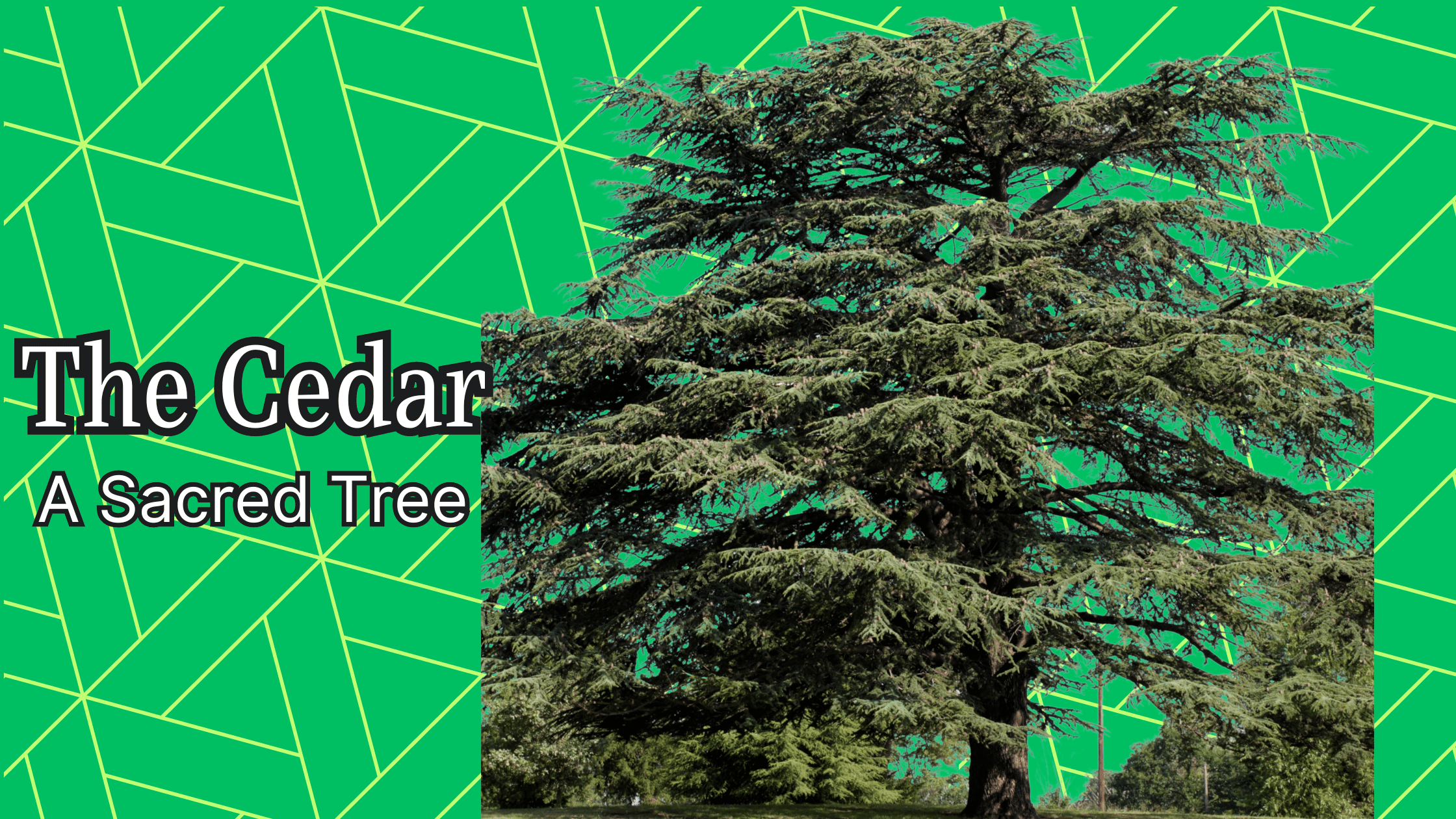
The majestic cedar tree is regarded highly by many cultures and religions. Owing to its profound symbolic and spiritual significance. In this captivating narrative, we shall delve into the multifaceted aspects of cedar symbolism and its intertwined connection with different religions and traditions.
One of the primary interpretations of the cedar is its association with protection. Renowned for its robust and enduring timber, the cedar tree has an unparalleled ability. To withstand adverse weather conditions and repel pests. Furthermore, the aromatic oil and resin derived from the cedar exhibit antiseptic and insect-repelling properties. The cedar is effective in preventing infections and diseases. Countless civilizations have used cedar wood and oil. Examples are constructions of sacred spaces, including temples, shrines, and altars. Additionally, invaluable resources were used in the creation of tools, weaponry, and furniture. The cedar is also regarded as a safeguard against malevolent spirits and negative energies, as its alluring fragrance purifies the air and engenders an atmosphere of sanctity.
Cedar carries a profound symbolism that extends beyond its physical presence. One such meaning is wisdom, derived from the fact that cedar trees have stood as witnesses to the ebb and flow of civilizations, the passage of seasons, and the eternal cycles of life and death. These ancient beings possess an innate wisdom that comes with their age, some reaching over a millennium in existence. With deep roots grounding them to the earth and towering heights that seem to touch the heavens, cedars embody the delicate equilibrium, between the physical and spiritual realms. They serve as a conduit to the divine source of knowledge and understanding, a symbol of wisdom in numerous sacred texts and mythologies. Like the Bible, Quran, Epic of Gilgamesh, and Vedas.
Another meaningful interpretation of cedar is peace. The mere presence of a cedar tree has an impact, on the mind and emotions. Offering solace and tranquility. Its soothing fragrance is known to alleviate stress, anxiety, and anger, promoting a sense of relaxation, meditation, and harmony. Moreover, cedar represents peace among individuals, fostering cooperation, communication, and compassion. It is often utilized in various ceremonies and rituals. Aimed at restoring peace and harmony within oneself, one’s community, and one’s surroundings. The significance of cedar goes beyond its physical attributes, encompassing the realms of wisdom and peace, ultimately offering a journey toward enlightenment and serenity.
Some examples of how different cultures and beliefs have used or interpreted the cedar symbolism are:
Native American
The cedar tree is not merely an arboreal entity; rather. It possesses a spirit and distinctive character. It is an emblem of fortitude, tenacity, and endurance, for it endures the harshest weather conditions and thrives for numerous generations. Moreover, the cedar tree serves as a fount of healing properties, wisdom, and safeguarding, generously bestowing its medicinal qualities, timber, and aromatic essence on those. Who demonstrate reverence and admiration for it.
One of the most prevalent methods employed by Indigenous Americans involves utilizing cedar for smudging, a ritual centered around purifying oneself or space using smoke. The smoke emitted by cedar is thought to carry prayers to the Creator and serve as a deterrent against negative energies and influences. Smudging can be done before or after ceremonies, such as sweat lodges, vision quests, or as a daily practice to maintain equilibrium and serenity.
Another way in which Indigenous Americans utilize cedar is by constructing sweat lodges, which are structures shaped like domes and covered with blankets or animal hides. These lodges serve as spaces where individuals can partake in sweating, praying, singing, and receiving guidance from the spiritual realm. Cedar is used to construct the frame of the lodge, as well as for the firewood that heats the stones within. It is sprinkled onto the hot stones to generate steam that purifies both the body and mind.
Native Americans utilize cedar in various ways, including for vision quests. The quests serve as transformative experiences, leading individuals on journeys of self-discovery and spiritual enlightenment. Vision quests involve fasting, isolation, and immersing oneself in nature for extended periods, spanning days or weeks. The ultimate goal is to receive a vision or message from ancestral figures, spirits, or power animals. Cedar plays a significant role in these quests, serving to demarcate the boundaries of the quest area and as a medium for making offerings and prayers to the spiritual realm.
The cedar holds a profound significance for Native Americans, transcending its physical existence as a mere tree. It stands as a revered companion, bridging their connection to their ancestral heritage, culture, and spirituality. Through the teachings of the cedar, an ethos of reverence and gratitude towards nature’s offerings is imparted, fostering a harmonious coexistence with oneself and fellow beings.
Ancient Egypt
In ancient Egypt, this enduring evergreen conifer held immense value beyond its practical utility as timber. It possessed profound symbolic and spiritual meanings, intricately woven into the fabric of Egyptian culture and religion.
One facet of the cedar’s significance lay in its association with fertility and rebirth. Ancient Egyptians believed that this sacred tree possessed the power to bestow new life upon the departed. The cedar was linked to Osiris, the god representing the realm of the afterlife and resurrection. A myth recounts the tale of Osiris’ demise at the hands of his brother Seth, who dismembered his body and scattered the pieces across the land. In her relentless pursuit, Isis, Osiris’ wife, discovered his remains nestled within a cedar tree. With her mystical abilities, she skillfully reassembled and resurrected him, breathing life once more into his being.
The cedar tree held a significant role in the concept of rebirth, particularly in the practice of mummification by the ancient Egyptians. Mummification was a preservation technique employed to ensure the body’s integrity in the afterlife. To achieve this, a combination of substances like natron, resin, spices, and oils were utilized to desiccate and embalm the corpse. Among these oils, cedar oil possessed remarkable properties that served as an effective deterrent against bacteria and fungi. Its implementation prevented decomposition and bestowed a pleasant fragrance upon the body.
Moreover, the cedar tree was revered for its protective qualities against malevolent spirits. Egyptians harnessed the power of cedar wood in crafting coffins, sarcophagi, and amulets for the deceased. They also burned cedar incense within temples and tombs to cleanse the air and repel negative energies. Considered both potent and sacred, the cedar tree offered safeguarding abilities to the living and the departed alike.
The ancient Egyptians held the cedar in high regard, recognizing its significance beyond being a mere tree. It represented the cycles of life, death, and rebirth, holding a pivotal role in their culture and religion. The cedar was treasured and revered as a natural gift bestowed upon them.
Sumerian Mythology
The tale of Gilgamesh, a narrative that dates back to ancient times, recounts the remarkable exploits of a sovereign from Uruk who embarks on a quest for immortality and renown. One of his extraordinary endeavors involves a bold raid on a revered grove of cedar trees, where he confronts a terrifying monster and incurs the wrath of a god.
In the ancient civilization of Mesopotamia, the Sumerians held the cedar forest in utmost sanctity. They perceived the towering cedar trees as the abode of the Anunnaki, divine entities that governed the natural forces. Among these deities was Enlil, the Master of Wind, who possessed the ability to summon tempests and floods. Enlil served as the patron deity of the cedar forest and its formidable guardian, Humbaba. This creature possessed the head of a lion, the body of a serpent, and razor-sharp teeth.
Gilgamesh, being of mixed divine and mortal lineage, yearned to prove his might and valor by felling a cedar tree and returning it triumphantly to his city. Additionally, he sought to etch his name in the annals of history, driven by his fear of death and being forgotten. Persuading his loyal companion Enkidu, a wild man who had been civilized by a priestess, Gilgamesh embarked on this perilous mission. Armed with axes and swords, they ventured forth into the cedar forest.
Upon entering the forest, their eyes widened in awe at the magnificent trees that towered towards the heavens. The voice of Humbaba echoed through the woods, issuing a dire warning that they would face death if they dared to lay hands on his sacred arboreal realm. Undeterred by his threats, Gilgamesh and Enkidu pressed forward, brandishing their weapons in a fierce assault. They engaged in a prolonged battle until the resolute Gilgamesh managed to inflict a deep wound upon Humbaba with a mighty swing of his axe. Humbaba, realizing the gravity of his situation, pleads for mercy, offering himself as a subservient slave to Gilgamesh. Although tempted to show clemency, Enkidu urged Gilgamesh to deliver a final blow, fearing retribution from Enlil for their audacious act.
Listening to Enkidu’s counsel, Gilgamesh swiftly ended Humbaba’s life with a decisive strike of his sword. Subsequently, he felled the tallest cedar tree and skillfully fashioned it into a sturdy raft. As a testament to their triumph, Gilgamesh took Humbaba’s severed head as a trophy. Together, they embarked on a journey down the flowing waters of the river Euphrates, returning triumphantly to Uruk, where their victory was celebrated and hailed.
Their elation, however, was short-lived, for it wasn’t long before Enlil discovered their transgressions. His anger burned bright as he learned of their slaying of his servant and the destruction of his sacred woodland. In his fury, he placed a curse upon both Gilgamesh and Enkidu and unleashed a cascade of calamities upon them. To further punish them, he dispatched a captivating goddess named Ishtar to seduce Gilgamesh, yet the heroic king spurned her advances. In retaliation, Ishtar released the Bull of Heaven, a monstrous creature that wreaked havoc upon the city of Uruk. Despite this formidable foe, Gilgamesh and Enkidu managed to vanquish the bull, but in doing so, they only intensified Enlil’s wrath.
Convinced that one of them must pay the ultimate price for their crimes, Enlil singled out Enkidu. The loyal companion fell ill and suffered for twelve agonizing days before finally succumbing to death. Gilgamesh was shattered by the loss of his dear friend and comrade. It was then that he realized the fragility of life and the impermanence of his accomplishments. Driven by grief and a newfound awareness of mortality, Gilgamesh set forth on a new quest—to uncover the secret of eternal life.
Thus begins the epic of Gilgamesh—a captivating saga delving into profound themes of friendship, mortality, heroism, and hubris. Through this gripping tale, we gain invaluable insights into the beliefs and culture of the ancient Sumerians, while also exploring the timeless essence of the human condition.
Hinduism
The deodar cedar is a majestic tree that grows in the Himalayan region of India, Nepal, Pakistan, and Afghanistan. It is one of the most sacred trees in Hinduism, as it is believed to embody the qualities of health, wealth, and happiness. The name deodar comes from the Sanskrit word devadaru, which means “wood of the gods”. The deodar cedar is also linked to Shiva, the god of destruction and regeneration, who is said to reside in the Himalayas. Shiva is often depicted with a trident made of deodar wood, and his devotees offer him deodar leaves and flowers as a sign of respect and worship.
The deodar cedar has many uses and benefits for humans and the environment. It is a valuable source of timber, resin, oil, and medicine. It is used for building houses, temples, furniture, boats, and musical instruments. It is also used for making incense, perfumes, cosmetics, and soap. The resin and oil of the deodar cedar have antiseptic, anti-inflammatory, and insecticidal properties. They are used to treat wounds, skin diseases, rheumatism, coughs, colds, and fever. The deodar cedar also helps to purify the air and water by absorbing pollutants and releasing oxygen. It also prevents soil erosion and landslides by stabilizing the slopes of the mountains.
The deodar cedar holds great significance in Hinduism as a representation of spirituality and culture. It is customary to plant this sacred tree near temples and shrines as a symbol of devotion and reverence. Moreover, the deodar cedar plays a role in various rituals and ceremonies, including weddings, funerals, festivals, and yajnas (fire sacrifices). Those who plant or reside near the deodar cedar are believed to be blessed with good fortune, prosperity, and protection. Additionally, it is said that wishes are granted and desires fulfilled for those who offer prayers beneath or touch this magnificent tree.
The deodar cedar demands our utmost respect and care as it holds a sacred place in our lives. It is a precious gift from nature, enriching us in numerous ways. Furthermore, it is a constant reminder of our connection to the divine and our responsibility to preserve the environment. By planting more deodar cedars and safeguarding the existing ones, we pay homage to our ancestors, worship our deities, and secure a brighter future for ourselves and future generations.
The Abrahamic Religions
The cedar of Lebanon, a magnificent tree with a profound and extensive past in the Middle East, holds great reverence among the adherents of Judaism, Christianity, and Islam. It is regarded as a symbol embodying numerous virtues and values within these three Abrahamic religions. In the following article, we shall delve into the various references to and applications of the cedar of Lebanon within these religious traditions.
Judaism
The cedar of Lebanon holds a significant position within Jewish tradition, as it served as the primary material for constructing the Temple of Solomon in Jerusalem, the holiest site for the Jewish people. According to biblical accounts, King Solomon dispatched messengers to King Hiram of Tyre, a trusted ally and friend, to request cedar wood from Lebanon for his ambitious temple project. Hiram graciously acquiesced and mobilized many workers to fell the majestic cedars and transport them to Jerusalem. The Bible vividly portrays the temple as a magnificent edifice adorned with opulent embellishments of gold, silver, precious gems, and cedar wood. The cedar wood was skillfully employed in fashioning the doors, beams, pillars, and the cherubim that stood sentinel over the ark of the covenant
The cedar of Lebanon is also mentioned in several other passages in the Bible, often as a metaphor for greatness, nobility, splendor, and righteousness. For example, Psalm 92:12, says: “The righteous shall flourish like the palm tree: he shall grow like a cedar in Lebanon”. Ezekiel 31:3-5, it compares the glory of Pharaoh and Egypt to a cedar of Lebanon: “Behold, the Assyrian was a cedar in Lebanon with fair branches, and with a shadowing shroud, and of an high stature; and his top was among the thick boughs… Therefore his height was exalted above all the trees of the field, and his boughs were multiplied, and his branches became long because of the multitude of waters, when he shot forth”. In Song of Songs 5:15, it praises the beloved’s legs as “pillars of marble, set upon sockets of fine gold: his countenance is as Lebanon, excellent as the cedars”.
Christianity
The cedar of Lebanon is also respected and admired by Christians, who regard it as a symbol of Christ and his church. In the New Testament, Jesus is called the “branch” or the “shoot” that comes from the root of Jesse, the father of King David. This refers to the prophecy in Isaiah 11:1-2, which says: “And there shall come forth a rod out of the stem of Jesse, and a Branch shall grow out of his roots: And the spirit of the Lord shall rest upon him”. Some Christian interpreters see this branch as a cedar of Lebanon, which represents the royal lineage of David and the messianic hope of Israel. Jesus is also compared to a cedar of Lebanon in his strength, beauty, durability, and fragrance.
The cedar of Lebanon is also seen as a symbol of the church, which is built on the foundation of Christ and his apostles. The church is described as a “spiritual house” or a “holy temple” that is made of living stones (1 Peter 2:5; Ephesians 2:19-22). The church is also called the “body of Christ” or the “bride of Christ” that is adorned with grace and glory (1 Corinthians 12:27; Revelation 21:9-11). The cedar wood that was used for Solomon’s temple can be seen as a foreshadowing of the church that was built by Christ and filled with his presence.
Islam
The cedar of Lebanon is also honored and appreciated by Muslims, who consider it a symbol of purity, dignity, generosity, and faith. In the Quran, the cedar is mentioned twice, both times about paradise. In Surah 56:27-33, it says: “And those foremost (in faith) will be foremost (in paradise). These will be those nearest to Allah. In gardens of bliss… Reclining on raised couches; they will see there neither (burning) sun nor (freezing) cold. And near above them are its shades… And among its (fruits) are those having husk closed tightly (like date-stones). And among its (fruits) are those having husk open loosely (like banana). And among its (fruits) are those having no husk at all (like grapes). And among its (trees) are those having thorns (like citrus). And among its (trees) are those having no thorns at all (like figs). And among its (trees) are those having fragrance (like jasmine). And among its (trees) are those having no fragrance at all (like cedars)”. In Surah 80:24-32
As you can see, the cedar tree has many meanings and associations across different cultures and beliefs. It is a tree that inspires awe and respect for its beauty, longevity, and symbolism. The cedar can teach us many lessons about life, such as how to be strong yet flexible; how to be grounded yet open; how to be wise yet humble; and how to be peaceful yet powerful.


Leave a Reply