
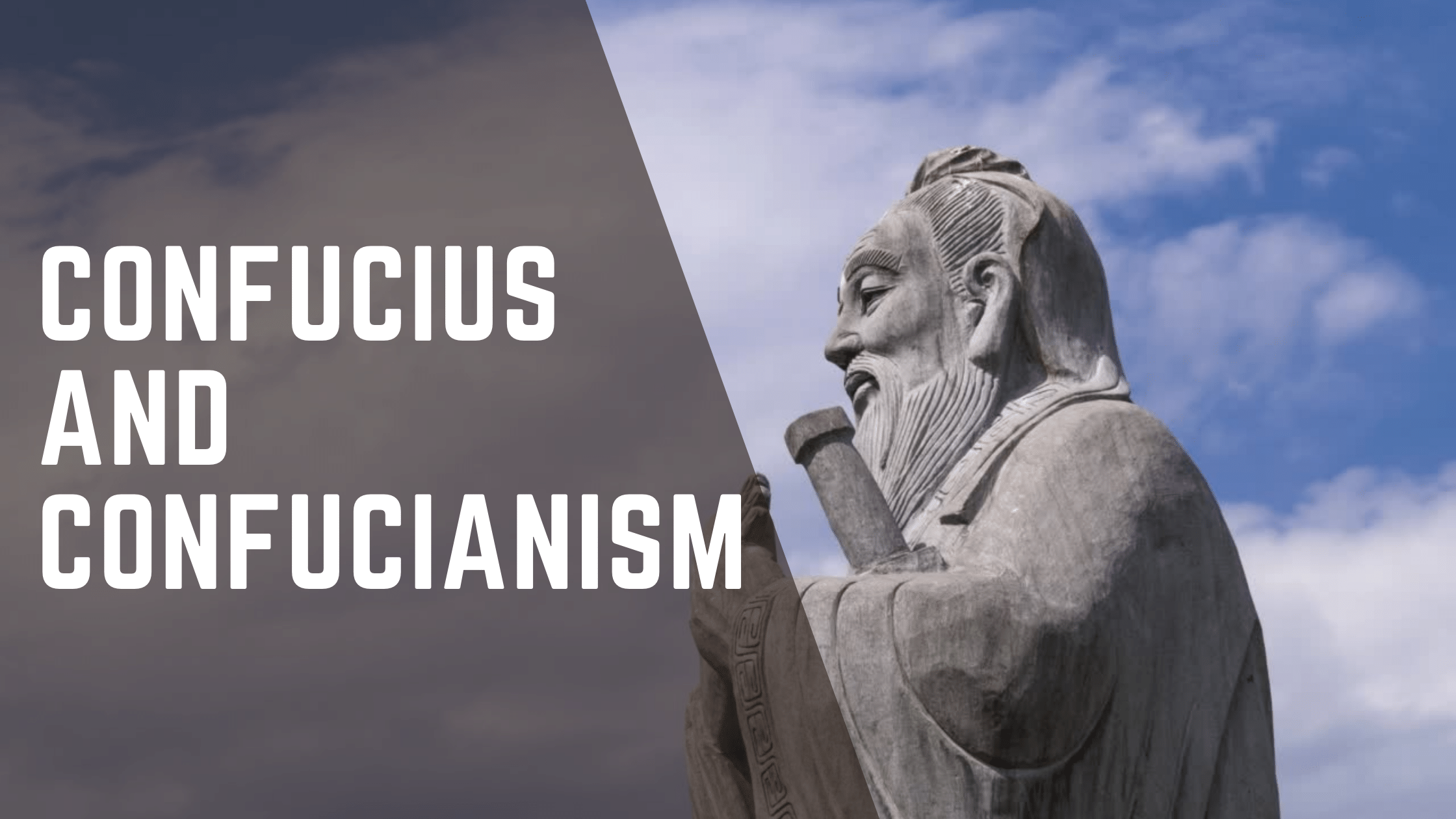
Confucius, a renowned Chinese philosopher, educator, and political theorist, lived from 551 to 479 BCE. Confucius is the founder of Confucianism, a profound ethical and social philosophy that has significantly shaped the cultural and historical landscape of China and other East Asian nations.
Born in Lu, now part of Shandong province, Confucius hailed from a noble yet impoverished family. He belonged to the Kong lineage, an esteemed aristocratic clan that had long served the rulers of the state of Song. Sadly, Confucius lost his father at a tender age and was raised in modest circumstances by his mother. Despite facing hardships, he showed immense dedication to learning and sought knowledge from a young age.
Confucius immersed himself in the study of the six arts. The Six Arts encompassed various disciplines such as ritual, music, archery, chariot driving, writing, and mathematics. He also delved into the ancient classics like poetry, history, and divination. Others recognized his intellect and wisdom. He attracted numerous disciples who eagerly followed him and meticulously documented his teachings.
In addition to his role as an educator, Confucius also held a position as an official in the state of Lu. He became disillusioned by the corruption and disorder within the government. Confucius eventually chose to resign from his post. Despite this setback, his influence continued to grow. He dedicated himself to imparting moral and ethical guidance to his disciples. Confucius’s teachings have had a profound impact on Chinese society for centuries to come.
Later in life, Confucius embarked on a journey throughout China, disseminating his ideas and searching for a ruler who would embrace his moral and political reforms. Upon returning to Lu during his old age, he dedicated himself to the authorship and editing of the renowned Chinese classic texts. Ultimately, at age 72, Confucius passed away in 479 BCE.
Some Scholars consider him the author or editor of numerous Chinese literary works, including the Five Classics: the Book of Poetry, the Book of Documents, the Book of Rites, the Book of Changes, and the Spring and Autumn Annals. However, some contemporary scholars doubt whether he composed or edited all of these texts. Certain ones may have been writing before or after his lifetime.
The teachings of Confucius find their primary compilation in the Analects, a comprehensive anthology featuring his profound sayings and dialogues with his disciples. Within the Analects, an array of essential subjects. The Analects encompass ethics, politics, education, human nature, filial piety, loyalty, benevolence, righteousness, reciprocity, ritual propriety, and wisdom.
Here are some quotes from chapters of the Analects and their explanations:
Chapter 1: Learning
“The Master said: ‘Is it not pleasant to learn with a constant perseverance and application?'”
Confucius’s fondness for knowledge is evident in this quotation, which expresses his conviction that learning should be pursued with unwavering dedication and genuine enthusiasm.
Chapter 2: Goodness
“The Master said: ‘To be able to practice five things everywhere under heaven constitutes perfect virtue.’ He begged to ask what they were. The Master said: ‘Gravity, generosity of soul, sincerity, earnestness, and kindness.'”
This quote exemplifies Confucius’s understanding of virtue or ren (humaneness), encompassing five ethical virtues that individuals should nurture and embody.
Chapter 3: Filial Piety
“The Master said: ‘Filial piety and fraternal submission! Are they not the root of all benevolent actions?'”
This quotation exemplifies the significance that Confucius placed on the virtues of filial piety, known as xiao, which involves showing respect to one’s parents and elders, and fraternal submission, known as ti, which entails displaying respect towards one’s siblings and peers. These virtues serve as the fundamental principles underlying all ethical conduct.
Chapter 4: The Mean
“The Master said: ‘The superior man is catholic [universal] and not partisan. The mean man is partisan and not catholic.'”
This quotation exemplifies Confucius’s concept of the mean, also known as Zhong Yong or the golden mean. It represents a state of equilibrium and unity between opposing extremes. The ideal individual, referred to as the superior man or junzi, is a person who embraces the mean, demonstrating open-mindedness and impartiality. On the other hand, the mean man or xiaoren represents one who strays from the mean, displaying bias and a narrow-minded perspective.
Confucianism is not a religion in its strictest sense; instead, it is a humanistic philosophy that places great importance on the development of moral character, the establishment of social harmony, the virtues of loyalty and filial piety, and the practice of humaneness.
Some of the core concepts of Confucianism are:
Ren
Ren is the concept of humaneness, benevolence, or goodness, and holds the utmost significance in Confucius’ teachings. It encompasses the essence of loving and caring for others, particularly those in need or experiencing suffering. According to Confucius, ren serves as the foundation for all other virtues, embodying the core of human nature.
Confucius emphasized the universality of ren with his famous quote, “Love all men” (Analects 12.22). This profound statement reveals that ren extends beyond familial or friendly relationships, encompassing all individuals regardless of their social status, background, or beliefs. Furthermore, Confucius stressed that ren should manifest in concrete actions rather than mere words or sentiments. For instance, he advocated for the golden rule of Confucianism: “Do not do to others what you do not want done to yourself” (Analects 15.23). This principle guides individuals to treat others with respect and kindness.
Confucius’ teachings on ren inspire individuals to cultivate deep compassion and empathy towards their fellow human beings. By embracing ren, one can contribute to a harmonious and benevolent society where all individuals are valued and supported.
Confucius also emphasized the perpetual nature of ren. Highlighting that ren cannot be achieved in a single instance. Ren necessitates continuous learning and application. In his own words, he declared, “At fifteen, I devoted myself to acquiring knowledge; at thirty, I solidified my convictions; at forty, I experienced no more uncertainties; at fifty, I comprehended the divine decree; at sixty, I listened attentively; at seventy, I could pursue my aspirations without transgressing societal norms” (Analects 2.4). This account demonstrates Confucius’ humility and unwavering commitment to cultivating ren throughout his lifetime. He constantly sought personal growth and self-improvement.
Ren, as a timeless and universal virtue, serves as an inspiration for us today. It encourages us to embody compassion, wisdom, and integrity. In daily life.
Li
Li, a term from China, encompasses the concepts of rites, rituals, and propriety. It serves as a set of guidelines that govern social interactions, ensuring order and harmony. Within its scope, li includes the standards of etiquette, courtesy, and civility that demonstrate respect for others. As a central principle in Confucianism, li holds significant importance.
One of the most renowned quotes regarding li originates from the teachings of Confucius. He emphasized, “Abstain from looking at anything contrary to ritual propriety; abstain from listening to anything contrary to ritual propriety; abstain from speaking about anything contrary to ritual propriety; abstain from doing anything contrary to ritual propriety” (Analects, 12:1). This quote emphasizes that li is not solely concerned with external actions but also encompasses internal disposition and self-discipline. Confucius firmly believed that by adhering to li, individuals can cultivate their humanity (ren) and attain nobility (junzi).
Li is not a rigid collection of regulations. It is a malleable and ever-changing principle that adjusts to diverse circumstances and environments. It also signifies the equilibrium between humanity and the natural world, the cosmic arrangement. Through practicing li, individuals can harmonize themselves with the inherent patterns and cycles of the cosmos, attaining a state of equilibrium and serenity.
Xiao
Xiao is the concept of filial piety or the devotion to one’s parents and ancestors. It forms the very cornerstone of Confucian ethics. It encompasses honoring, obeying, serving, and caring for one’s elders and forebears. Confucius believed that harmonious human relationships are vital for social order and moral development, and Xiao serves as the bedrock for cultivating these connections. It goes beyond being a personal virtue; it is a societal obligation that directly impacts the stability and prosperity of families, communities, and even the state.
Xiao holds significance not only in ancient eras but also in contemporary society. It imparts valuable lessons on the importance of cherishing our familial bonds, displaying reverence towards our elders, and actively contributing to the betterment of society. Moreover, it serves as a reminder that we are not solitary beings but interconnected individuals, intricately woven into a web of relationships that mold our sense of self and shape our ultimate destiny. By embracing and embodying the principles of xiao, we can nurture our humanity and attain harmonious coexistence. With ourselves, others, and the natural world.
Junzi
A junzi, often translated as a gentleman, nobleman, or superior individual, embodies the ideals envisioned by Confucius. This ideal person possesses virtues such as ren (benevolence), li (propriety), xiao (filial piety), and others. The junzi upholds moral integrity. They also cultivate knowledge, refinement, and generosity.
Confucius’s teachings encompassed ethics, politics, and human relationships. He aimed to establish a harmonious society founded on moral principles and human compassion. He firmly believed that with self-cultivation and the pursuit of knowledge. Anyone could attain the status of a junzi.
One of his famous quotes is:
“When the Superior Man eats he does not try to stuff himself; at rest, he does not seek perfect comfort; he is diligent in his work and careful in speech. He avails himself to people of the Tao and thereby corrects himself. This is the kind of person of whom you can say, ‘he loves learning.'”
This quotation demonstrates that a junzi embodies qualities such as moderation, diligence, prudence, humility, and respectfulness. They do not indulge in extravagance or seek fleeting pleasures but instead strive to better themselves and adhere to the principles of the Tao. The junzi embraces the pursuit of knowledge, recognizing that there is always room for personal growth and the acquisition of wisdom.
A junzi is also an individual who exemplifies compassion and manifests benevolent actions towards others. They treat everyone with utmost courtesy and kindness, irrespective of their societal position or background. Adhering to the ethical principle of ren, they strive to treat others as they want to be treated by others.
Furthermore, a junzi is an individual who displays profound reverence for their elders and ancestors, diligently fulfilling their responsibilities towards their family and society. They embody the concept of xiao, which encompasses filial piety and loyalty. By honoring their parents, supporting their relatives, and obeying their superiors, they demonstrate their commitment to these values.
Moreover, a junzi is an individual who conducts themselves appropriately in all circumstances, adhering to the customs and norms of their culture. They follow the principle of li, which emphasizes propriety and etiquette. They know how to dress, communicate, dine, greet others, and comport themselves in a manner that signifies respect and dignity.
A junzi embodies a multifaceted character. A junzi displays compassion and benevolence towards others, maintain reverence for their elders and ancestors, fulfill their familial and societal obligations, and observe the rituals and norms of their culture. Through actions and demeanor, they exemplify the values of ren, xiao, and li.
A junzi is a person who embodies the highest ideals of Confucianism and humanism. He is a person who strives to be good, wise, and virtuous in all aspects of life. He is a person who can inspire others to do the same.
Some examples of Confucianism in practice are:
Engage in rituals and ceremonies to honor one’s ancestors and commemorate significant life events such as births, weddings, and funerals.
Abiding by the principles of the five fundamental relationships that govern human society: the relationship between ruler and subject, father and son, husband and wife, elder brother and younger brother, and friend and friend. Each relationship entails specific duties and responsibilities with mutual respect and reciprocity.
Pursuing moral education and personal growth through studying revered texts, wise individuals, teachers, and peers. As Confucius once proclaimed, “Learning without contemplation is wasted effort; contemplation without learning is perilous.”
Embracing the concept of reciprocity and living by the golden rule: “Treat others as you would like to be treated by them.” This principle encourages individuals not to do toward others they would find undesirable.
Leave a Reply