
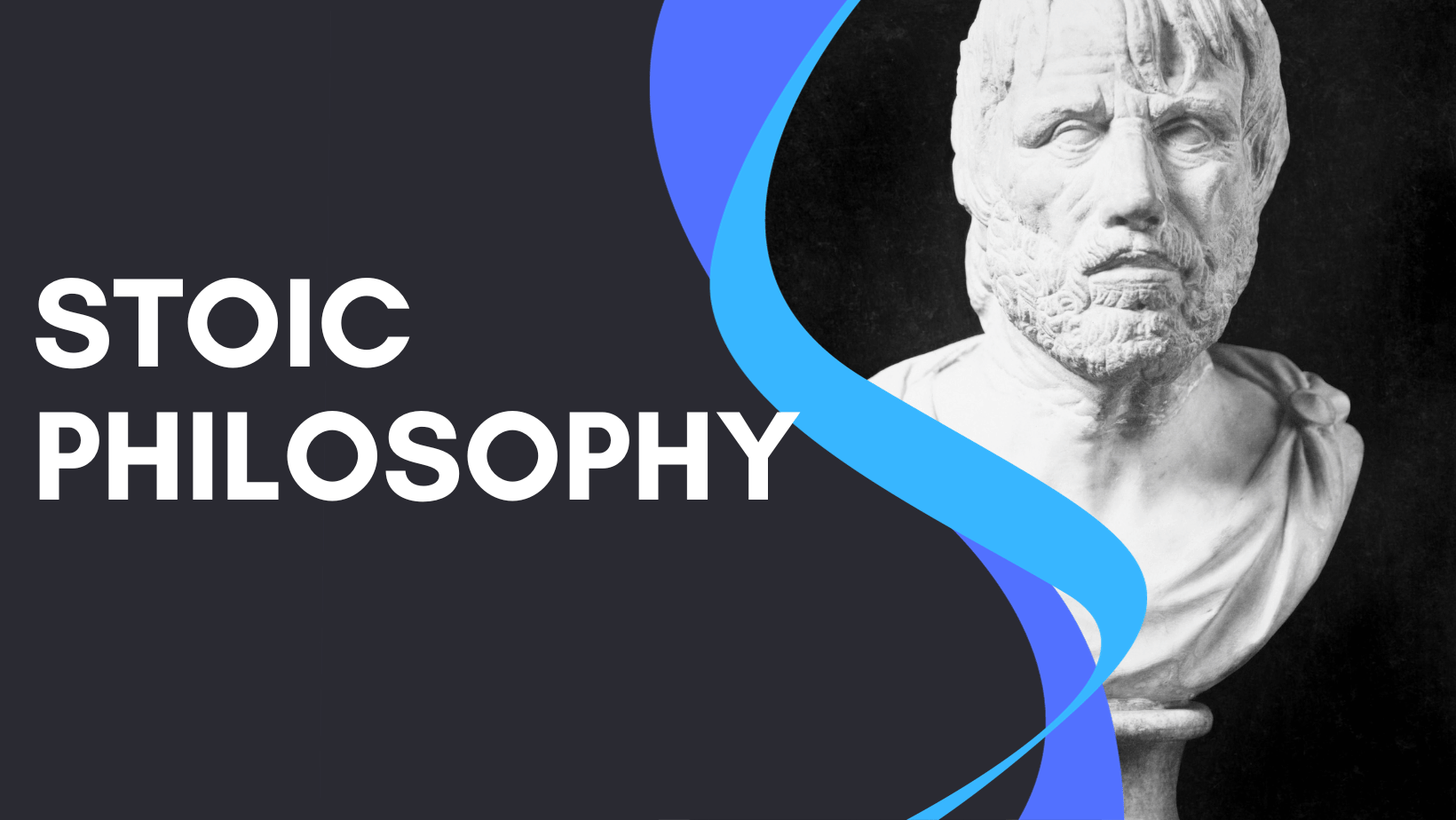
Stoic Philosophy is a school of thought that originated in ancient Greece and Rome, and teaches how to live a virtuous and happy life in harmony with nature and reason.
Who started Stoic Philosophy?
Stoic Philosophy was founded by Zeno of Citium, who taught his ideas in a public place called the Stoa Poikile (painted porch) in Athens, around 300 BC. He was influenced by the teachings of Socrates and the Cynics, who advocated a simple and ethical life. Zeno’s most influential successors were Cleanthes and Chrysippus, who developed and systematized his philosophy into three parts: physics, logic, and ethics.
What does Stoic Philosophy teach?
Stoic Philosophy teaches that the only thing that is truly good for human beings is virtue, which is the excellence of our rational and social nature. Virtue consists of four cardinal virtues: wisdom, courage, justice, and temperance. These virtues enable us to act appropriately in any situation, according to our roles and duties in life. Stoics also believe that everything else, such as health, wealth, pleasure, or pain, is indifferent (neither good nor bad), and has value only as material for virtue to act upon.
Stoics also teach that we should live in agreement with nature, which means both the nature of the universe and our nature. The nature of the universe is rational and orderly, governed by a divine force called logos (reason or word). The nature of our self is also rational and social, as we share a part of the logos within us. This part is called our daimon (spirit or genius), which guides us to our true purpose in life. By living in agreement with nature, we can achieve a smooth flow of life (euroia biou) and happiness (eudaimonia).
Stoics also teach that we should avoid being disturbed by our emotions, which are caused by our judgments about external things. Emotions such as anger, fear, grief, or envy are irrational and harmful, as they prevent us from acting virtuously and rationally. Stoics advise us to examine our judgments and correct them if they are false or unreasonable. They also recommend we practice various exercises, such as self-examination, meditation, visualization, or premeditation of evils, to train ourselves to be calm and resilient in the face of adversity.
Here are some examples of quotes from Stoic Philosophy and their explanations:
– “The chief task in life is simply this: to identify and separate matters so that I can say clearly to myself which are externals not under my control, and which have to do with the choices I control.” – Epictetus
This quote summarizes the core idea of Stoicism: to focus on what is under our control (our choices) and not on what is not under our control (external things). By doing this, we can avoid being frustrated or disappointed by things that happen to us and instead act with wisdom and virtue.
– “You have power over your mind – not outside events. Realize this, and you will find strength.” – Marcus Aurelius
This quote reminds us that we have the power to control our mind, which is the source of our happiness or misery. We cannot control what happens outside us, but we can control how we react to it. By realizing this power, we can find strength and courage to face any challenge.
– “No man is free who is not master of himself.” – Epictetus
This quote expresses the idea that freedom is not a matter of external circumstances, but of internal mastery. A person who is enslaved by his passions or fears is not free, even if he lives in a democracy. A person who is master of himself is free, even if he lives in a tyranny.
Who were the major Stoic philosophers?
The major Stoic philosophers were:
– Zeno of Citium (334-262 BC): The founder of Stoicism
– Cleanthes (330-230 BC): The second leader of the Stoic school
– Chrysippus (279-206 BC): The third leader of the Stoic school
– Panaetius (185-109 BC): The founder of Middle Stoicism
– Posidonius (135-51 BC): The most influential Middle Stoic
– Seneca (4 BC-65 AD): The most famous Roman Stoic
– Epictetus (50-135 AD): The most influential Roman Stoic
– Marcus Aurelius (121-180 AD): The Roman emperor and philosopher
Here are some examples of famous quotes from Stoic philosophers:
– “Happiness is a good flow of life.” – Zeno of Citium
– “Follow God.” – Cleanthes
– “The goal of life is living in agreement with nature.” – Zeno of Citium
– “We are disturbed not by what happens to us, but by our thoughts about what happens.” – Epictetus
– “It is not the things themselves that trouble us, but the opinions we have about them.” – Epictetus
– “The impediment to action advances action. What stands in the way becomes the way.” – Marcus Aurelius
– “What you are looking for is not out there, it’s in you.” – Seneca
– “The wise man is content with himself.” – Seneca
– “The best revenge is not to be like your enemy.” – Marcus Aurelius
– “The more we value things outside our control, the less control we have.” – Epictetus
How is Stoic Philosophy becoming popular again in modern culture?
Stoic Philosophy is becoming popular again in modern culture for several reasons. One reason is that Stoicism offers a practical and rational way of living that can help us cope with the challenges and uncertainties of our times. Stoicism teaches us how to be calm, resilient, and virtuous in any situation, and how to find meaning and happiness in our actions. Another reason is that Stoicism resonates with many people who are looking for a philosophy that is compatible with science, reason, and humanism. Stoicism does not rely on supernatural or dogmatic beliefs, but on natural and logical principles that can be tested and verified. A third reason is that Stoicism has inspired many influential figures in history and today, such as George Washington, Thomas Jefferson, Nelson Mandela, Barack Obama, Bill Clinton, Tim Ferriss, Ryan Holiday, and many others. These figures have shown how Stoicism can help us achieve great things and make a positive impact on the world.
If you are interested in learning more about Stoic Philosophy, you can check out these resources:
– The Daily Stoic: A website and newsletter that provides daily wisdom from Stoic Philosophy
– The Modern Stoicism: A website and organization that promotes the study and practice of Stoicism in the modern world
– The Meditations: A book by Marcus Aurelius that contains his reflections on Stoic Philosophy
– The Enchiridion: A handbook by Epictetus that summarizes the main teachings of Stoicism
– The Letters from a Stoic: A collection of letters by Seneca that offer practical advice on Stoic Philosophy
Leave a Reply