
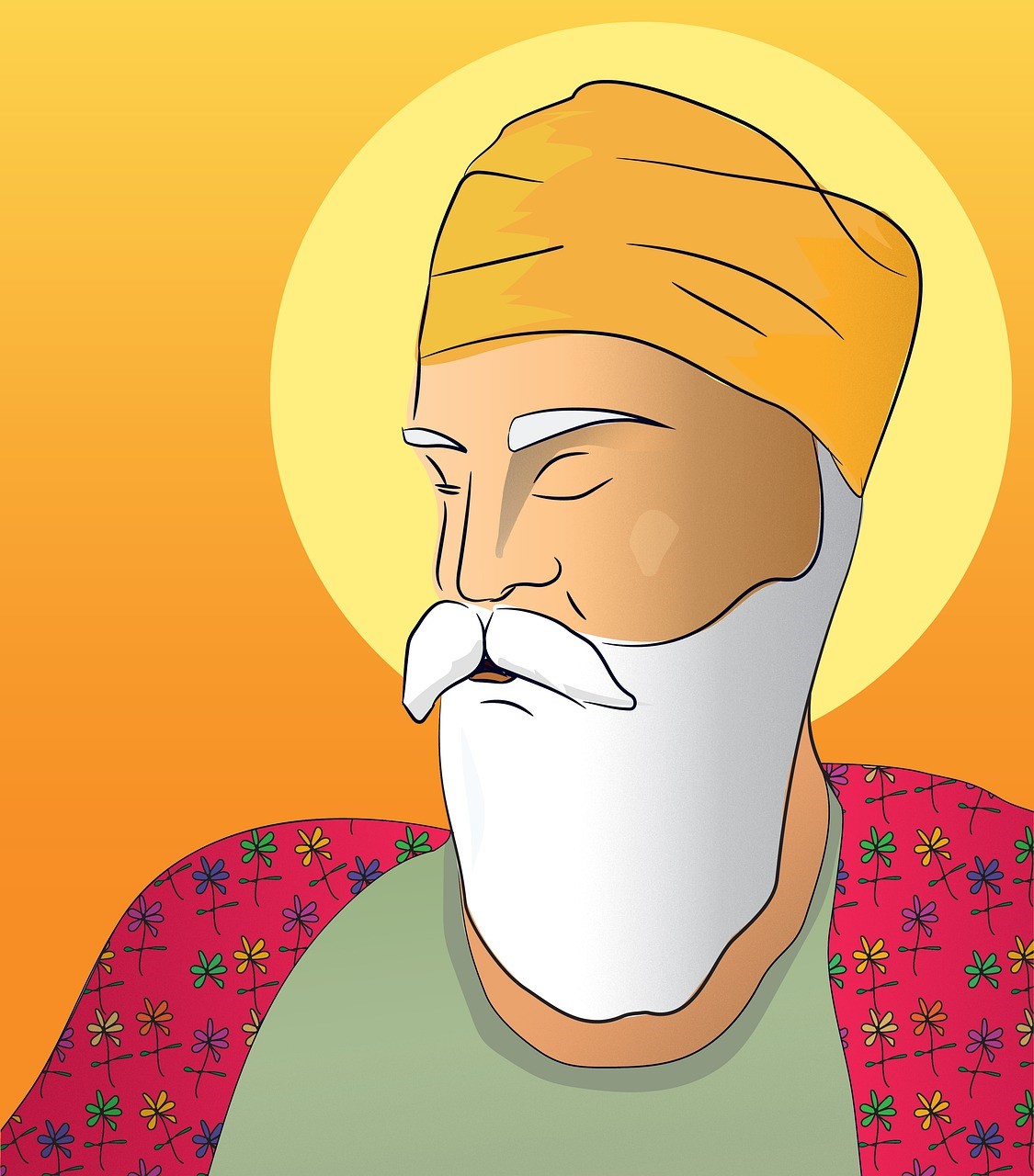
Photo by NPXL_Studio on Pixabay
Guru Nanak, the founder of Sikhism, was a spiritual leader who embarked on a remarkable journey to spread the message of love, equality, and universal brotherhood. Born in 1469 in present-day Pakistan, Guru Nanak’s teachings have transcended time and continue to inspire millions around the world. His spiritual quest was rooted in the belief that all humans are equal and that true enlightenment lies in embracing the diversity of faiths and fostering unity among all.
The life and teachings of Guru Nanak
Guru Nanak’s life was marked by profound spiritual experiences that shaped his teachings. From a young age, he displayed a deep sense of compassion and a keen interest in the mysteries of the universe. As he grew older, he embarked on extensive travels, engaging in profound conversations with scholars and saints of various faiths. These experiences led him to develop a unique spiritual philosophy that combined elements of Hinduism and Islam while emphasizing the unity of all religions.
Guru Nanak’s teachings were centered around three core principles: Naam Japna (remembering the divine through meditation), Kirat Karni (earning an honest living), and Vand Chakna (sharing with others). He emphasized the importance of leading a moral and ethical life, treating all individuals with respect and dignity, and serving humanity selflessly. His teachings laid the foundation for Sikhism, a religion that promotes equality, justice, and compassion.
The concept of universal brotherhood in Sikhism
Sikhism, as propagated by Guru Nanak, is built on the foundation of universal brotherhood. He believed that all humans are children of the same divine creator and that the divisions created by caste, creed, and religion are man-made constructs that hinder spiritual growth. Sikhism emphasizes the idea of “Ik Onkar,” which translates to “One God.” This belief underscores the unity of all beings and encourages followers to see the divine spark in every individual.
Guru Nanak’s message of universal brotherhood challenges the notion of exclusivity in religious practices and promotes inclusivity instead. He advocated for a society where people of different faiths could come together, celebrate their diversity, and work towards a common goal of love, peace, and harmony. Sikhism, therefore, rejects any form of discrimination or prejudice and encourages its followers to actively engage in interfaith dialogue and understanding.
Guru Nanak’s message of equality and social justice
One of the key teachings of Guru Nanak is the importance of equality and social justice. He vehemently opposed the rigid caste system prevalent in society at that time and called for its abolition. Guru Nanak believed that all individuals, regardless of their social status or background, are equal in the eyes of the divine. He challenged the prevailing norms of his time by actively promoting social equality and actively working towards uplifting those who were marginalized and oppressed.
Guru Nanak’s teachings emphasized the need for a just and compassionate society where everyone has equal opportunities and access to resources. He advocated for gender equality, empowering women, and rejecting the notion of superiority based on gender. His teachings continue to inspire individuals and communities to fight against injustice, discrimination, and inequality, and strive for a more equitable world.
The importance of Naam Simran (meditation) in Sikhism
Naam Simran, or the practice of meditating on the divine name, is a fundamental aspect of Sikhism. Guru Nanak believed that through meditation, one can attain spiritual enlightenment and connect with the divine. Naam Simran serves as a means to transcend the limitations of the material world and experience a profound sense of unity with the divine essence.
Meditation allows individuals to cultivate inner peace, self-awareness, and a sense of purpose. It helps in developing a deep understanding of one’s own self and the interconnectedness of all beings. Guru Nanak emphasized the importance of regular meditation as a means to overcome the ego, detach from material desires, and cultivate a sense of humility and gratitude towards the divine.
The legacy of Guru Nanak and its impact on modern society
Guru Nanak’s teachings and legacy continue to resonate with millions of people around the world. His message of love, equality, and universal brotherhood has transcended time and continues to inspire individuals from all walks of life. Sikhism, as a religion, has grown significantly and has become an important force for social change and community service globally.
The principles and values advocated by Guru Nanak, such as compassion, selfless service, and equality, have found resonance in various social justice movements. His teachings have influenced individuals to actively work towards creating a more inclusive and just society. The legacy of Guru Nanak serves as a guiding light for those seeking spiritual enlightenment and a source of inspiration for those striving for positive change in the world.
Exploring the Gurdwara and its significance in Sikhism
The Gurdwara, meaning “the gateway to the Guru,” is a place of worship and community gathering for Sikhs. It holds immense significance in Sikhism as it serves as a physical embodiment of Guru Nanak’s teachings and provides a space for individuals to come together in prayer, contemplation, and service.
Gurdwaras are open to people of all faiths and are known for their warm hospitality and generosity. They provide free meals, known as langar, to anyone who visits, regardless of their social status or background. This practice symbolizes the equality and unity promoted by Guru Nanak and serves as a reminder of the importance of selfless service and caring for others.
Celebrating Guru Nanak’s birth anniversary – Gurpurab
Gurpurab, or the birth anniversary of Guru Nanak, is celebrated with great enthusiasm and devotion by Sikhs worldwide. It is a time of reflection, prayer, and community festivities. The celebrations typically involve reading and singing of the Guru Granth Sahib (the Sikh holy scripture), processions, and offering prayers at the Gurdwara.
Gurpurab is an occasion to commemorate Guru Nanak’s teachings and reflect on their relevance in today’s world. It serves as a reminder to follow the path of love, equality, and selfless service, and to strive for the betterment of society. The festivities also provide an opportunity for individuals from different faiths to come together, learn about Sikhism, and foster interfaith dialogue.
Promoting interfaith dialogue and understanding through Guru Nanak’s teachings
Guru Nanak’s teachings encourage individuals to embrace diversity and foster interfaith dialogue and understanding. His message of universal brotherhood emphasizes the unity of all religions and promotes respect for different faith traditions. Through his teachings, Guru Nanak encourages individuals to rise above religious divisions and work towards a harmonious coexistence.
Promoting interfaith dialogue is essential in today’s world, where religious differences often lead to misunderstandings and conflicts. Guru Nanak’s teachings provide a framework for engaging in respectful conversations, learning from one another’s faith traditions, and finding common ground based on shared values. By actively participating in interfaith initiatives, individuals can contribute to building bridges of understanding and promoting peace and harmony in society.
Conclusion: The enduring legacy of Guru Nanak
Guru Nanak’s spiritual quest for universal brotherhood continues to inspire and guide individuals in their search for meaning and purpose. His teachings of love, equality, and compassion have transcended time and continue to hold relevance in today’s world. Sikhism, as propagated by Guru Nanak, promotes a way of life that emphasizes the unity of all beings and encourages individuals to work towards the betterment of society.
As we navigate the complexities of the modern world, Guru Nanak’s teachings serve as a guiding light, reminding us of the importance of embracing diversity, promoting equality, and fostering interfaith dialogue. By following in Guru Nanak’s footsteps, we can contribute to building a more inclusive and harmonious world, where individuals of all faiths can come together in the spirit of universal brotherhood. Let us honor Guru Nanak’s legacy by embodying his teachings and striving for a more compassionate and just society.
Join us in celebrating Guru Nanak’s teachings of love, equality, and universal brotherhood. Embrace diversity, promote interfaith dialogue, and work towards creating a more inclusive and harmonious world. Together, let us continue to bridge faiths and foster a spirit of unity and compassion.
3 responses to “Bridging Faiths: Discovering Guru Nanak’s Spiritual Quest for Universal Brotherhood ”
-
Ive read several just right stuff here Certainly price bookmarking for revisiting I wonder how a lot effort you place to create this kind of great informative website
-
Hi i think that i saw you visited my web site thus i came to Return the favore Im attempting to find things to enhance my siteI suppose its ok to use a few of your ideas
-
Thanks I have just been looking for information about this subject for a long time and yours is the best Ive discovered till now However what in regards to the bottom line Are you certain in regards to the supply


Leave a Reply